Larco Museum Lima Guide
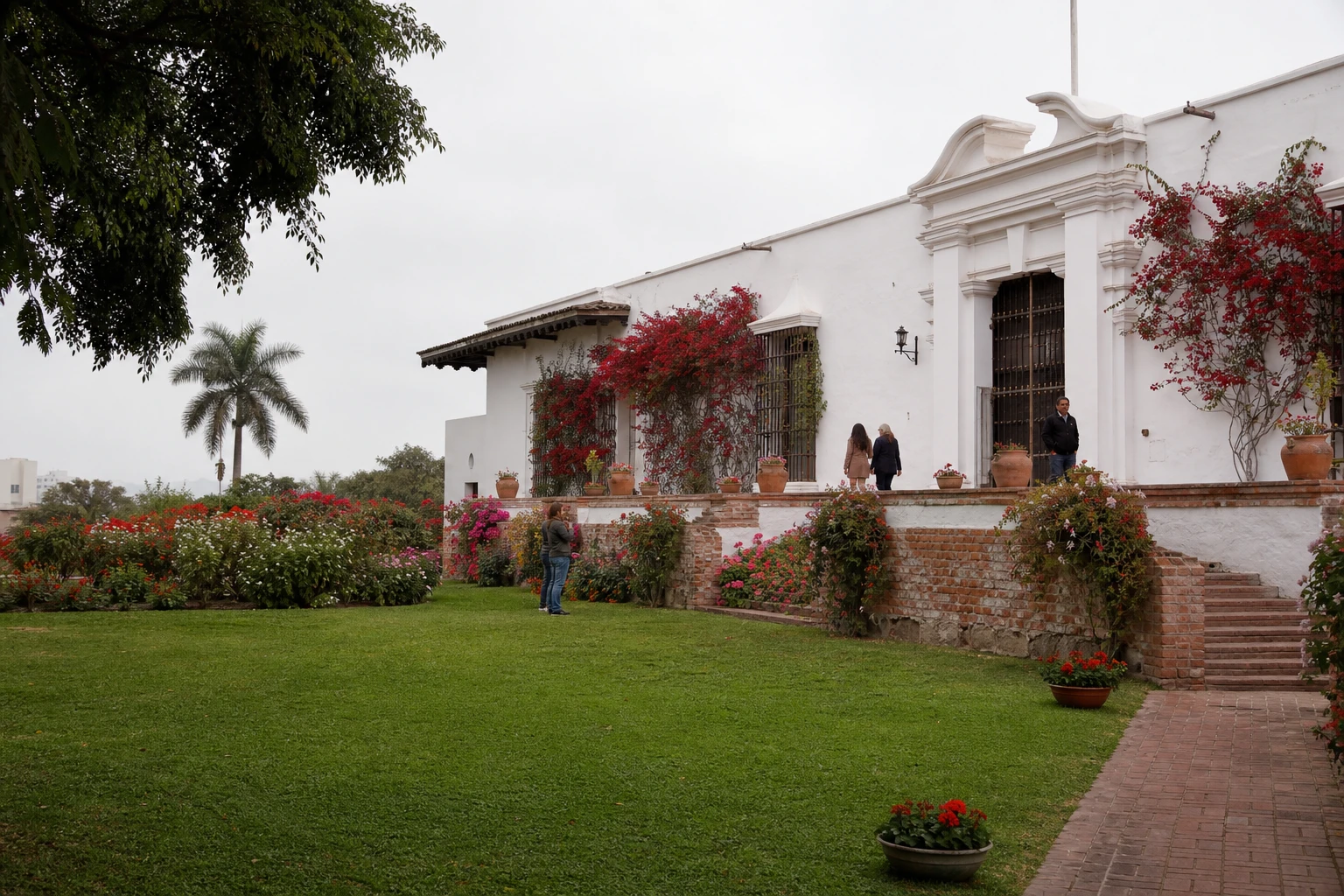
The Larco Museum offers one of Lima’s broadest introductions to ancient Peru in a historic mansion-and-garden setting. Its permanent exhibition, visible storage, renovated Checan Erotic Gallery, and landscaped grounds are included with admission. Together, they trace more than 5,000 years of history through ceramics, textiles, metalwork, and other pre-Columbian objects.
- Allow at least one hour for highlights, and longer if you want to explore the visible storage, erotic-art gallery, and gardens without rushing.
- The museum is in Pueblo Libre, outside the main Miraflores and Barranco visitor districts.
- Standard admission is currently S/50 at the museum or S/45 online, with reduced rates for eligible visitors.
- The museum normally opens daily, including public holidays, from 9:00 a.m. to 7:00 p.m.
- Enter from Calle Navarra and do not rely on finding parking, since nearby spaces are limited and first-come, first-served.
- Personal photography is permitted, but flash, tripods, selfie sticks, and photo shoots are prohibited.
This is a strong choice for travelers who want historical context before visiting archaeological sites elsewhere in Peru. The displays connect objects with beliefs, political authority, ritual, daily life, and the natural world. Visitors interested in design will also find plenty to study in the shapes, surfaces, and imagery of the collection. The main planning drawback is the Pueblo Libre location, which requires a separate trip from the coastal neighborhoods where many visitors stay.

Private Full-Day Best of Lima Tour
For the traveler who only has one day to spare in the capital city, this is the perfect tour for you! We'll cover all of the major highlights that Lim...
For a wider look at the capital’s major attractions, the guide to the best things to do in Lima for first-time visitors can help place the museum within a longer itinerary. The Larco works especially well as a focused half-day anchor rather than a hurried stop squeezed between distant neighborhoods.
Is the Larco Museum worth visiting?
The Larco Museum is worth considering if you want an object-rich introduction to pre-Columbian Peru presented in a manageable setting. The museum describes a collection of approximately 45,000 objects, while the visit spans more than 5,000 years of ancient Peruvian history. That scope makes it useful for travelers who want to recognize recurring symbols, materials, and cultural themes before seeing ruins or additional museum collections.
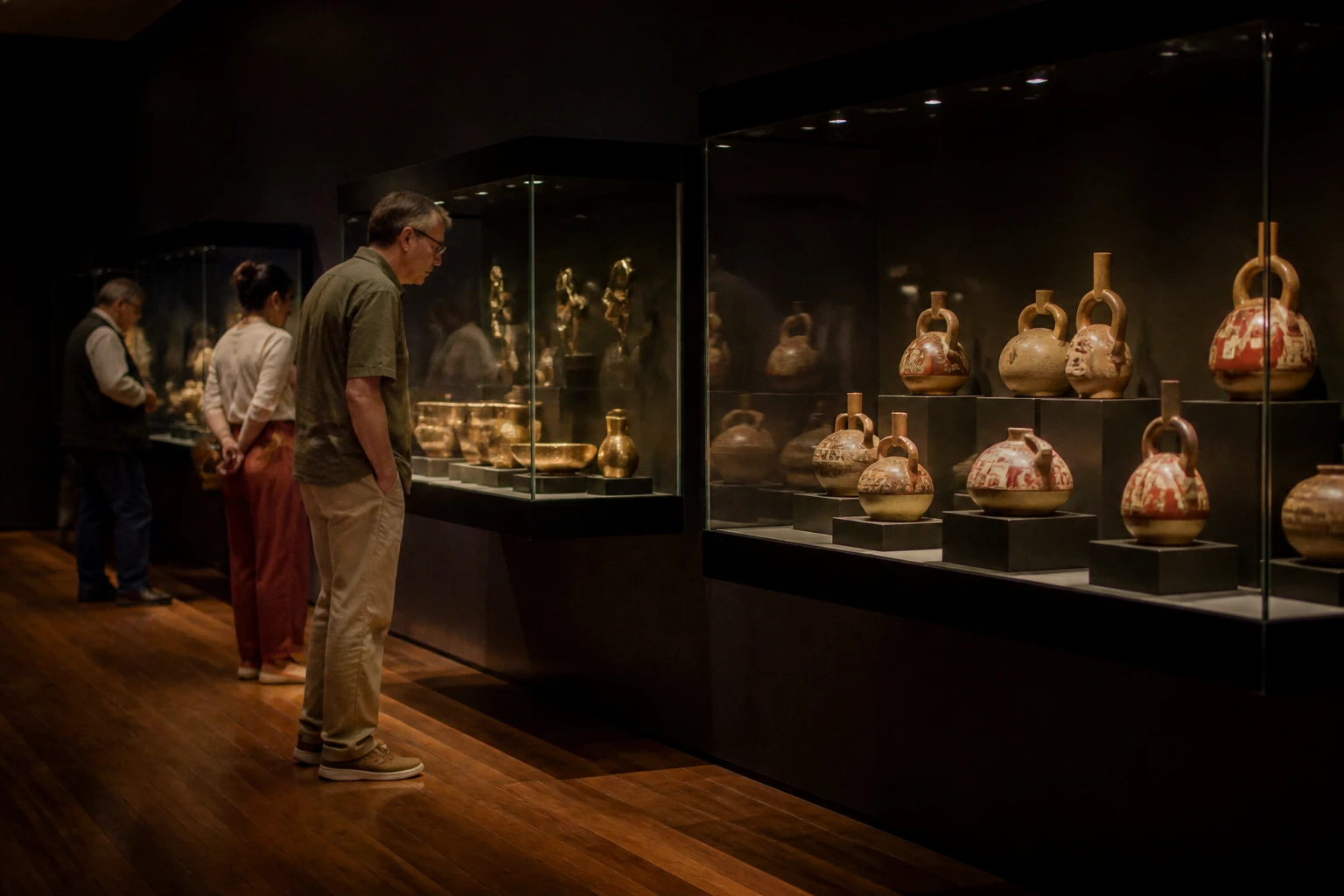
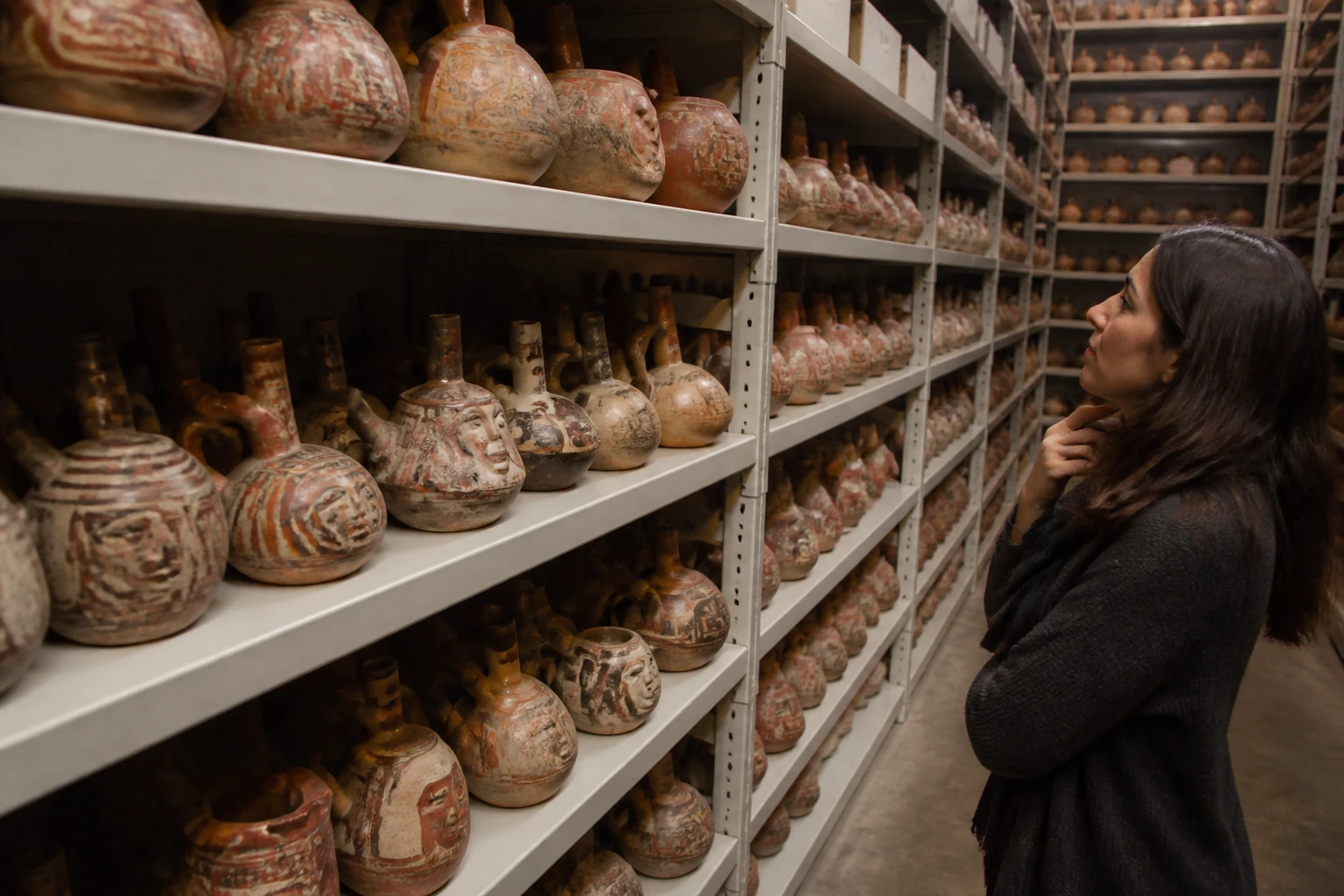
The visible storage area is an important part of the experience. Instead of limiting the visit to a tightly edited selection of masterpieces, it reveals the scale and repetition within the collection. Rows of related forms allow visitors to notice how vessels, faces, animals, and decorative patterns change across periods and cultures. Admission also covers the permanent exhibition, the Checan Erotic Gallery, and the landscaped outdoor areas.
The museum is less convenient for anyone trying to keep an entire day within Miraflores or Barranco. Pueblo Libre lies away from those hotel and dining districts, and parking near the museum is limited. Treat transportation as part of the plan rather than an afterthought, especially if you have another timed activity afterward.
What you can see with a standard ticket
A standard ticket includes the permanent exhibition, visible storage, the renovated Checan Erotic Gallery, and the museum’s open-air landscaped areas. The permanent galleries provide the clearest narrative path. They introduce ancient Peruvian societies through objects while showing how art communicated ideas about power, spirituality, fertility, death, and the environment.
Permanent exhibition
Begin with the permanent exhibition if this is your first encounter with pre-Columbian Peru. Following the main interpretation before entering storage makes the larger collection easier to understand. Exhibition translations are available in Spanish, English, French, Italian, German, Japanese, and Portuguese, which makes the historical framework accessible to a wide range of international visitors.
Visible storage
Visible storage rewards close observation. The volume of material can feel dense, so choose a few visual themes rather than trying to inspect every object. Look for changing facial expressions, animal forms, vessel shapes, and repeated surface patterns. Strollers are not permitted in this area, even though they are allowed in the museum’s galleries.
Checan Erotic Gallery
The renovated Checan Erotic Gallery is included in admission and displays pre-Columbian erotic art. Its subject matter makes it distinctive, but it belongs within the museum’s larger account of ancient Peruvian worldviews. Families should be aware of the explicit themes and decide how the gallery fits their visit.
Gardens and open-air areas
Leave some unstructured time for the landscaped grounds rather than walking directly back to the exit. The gardens provide a visual pause after the object-filled galleries and storage rooms. They are part of the admission experience, not a separate ticketed area.
How much time to allow
One hour is a sensible minimum for a highlights visit. The museum labels its “Masterpieces of Ancient Peru” experience as one hour, but that should not be treated as a guarantee that every included area can be explored comfortably within the same period. Visitors who want the permanent galleries, visible storage, erotic-art collection, and gardens should reserve additional time.
| Visit style | Suggested approach |
|---|---|
| Highlights visit | Use one hour as the minimum and concentrate on the permanent exhibition’s principal objects. |
| Balanced first visit | Follow the permanent exhibition, sample visible storage, enter the Checan Erotic Gallery, and pause in the gardens. |
| Detail-focused visit | Leave substantial extra time for labels, repeated forms in storage, photography, and the outdoor areas. |
Avoid planning a tight departure immediately after the one-hour mark. The museum’s scope encourages detours, particularly once you reach visible storage. A flexible schedule also gives you room to use the café-restaurant without cutting short the galleries.

Lima by night including Catacombs & Water Show Tour
On this night visit, you will get to learn about local life in Lima but also about the history of our beautiful coun...

Full Day Nazca Lines, Huacachina Oasis with Buggy and Sandboard
In this journey we will travel through Nazca known for its enigmatic lines drawn in the desert being preserved hundr...
Lima Half-Day City Walking Tour (Small Groups)
Discover the city of Lima known as the "City of Kings"! We will visit the highlights of the Historic Center of Lima...
Larco Museum tickets and admission prices
Standard adult admission is currently S/50 when purchased at the museum and S/45 online. Seniors over 60 pay S/35 on site or S/30 online. Students and visitors ages 9 to 17 pay S/25 on site or S/20 online. Children ages 3 to 8 are S/1, while children ages 0 to 2 enter free under the museum’s family-accompaniment conditions.
| Visitor | At museum | Online |
|---|---|---|
| Standard admission | S/50 | S/45 |
| Senior over 60 | S/35 | S/30 |
| Student or age 9–17 | S/25 | S/20 |
| Child age 3–8 | S/1 | S/1 |
| Child age 0–2 | Free | Free |
Bring valid identification if using a reduced or special rate. Prices and conditions can change, so check the museum’s current ticket information before paying. Temporary promotions should not be confused with standard admission rates.
Buying online or at the ticket office
Same-day tickets are sold on site. Online tickets currently cost S/5 less for standard adults and provide preferential access, although the museum states that its online purchase process is available only in Spanish. The ticket office accepts cash in Peruvian soles or U.S. dollars, along with Visa, American Express, Mastercard, and Diners cards.
Advance reservations matter for larger parties. Adult groups of 20 or more and all student groups must reserve ahead. Guided groups of at least 10 people are required to use audio equipment. The museum can provide that equipment without an additional charge when it is requested at least 24 hours in advance.
Opening hours and the best time to go
The museum normally opens daily, including public holidays, from 9:00 a.m. to 7:00 p.m. Reduced hours apply on December 24, December 25, December 31, and January 1. Published museum pages disagree on whether opening is at 9:00 or 10:00 a.m. on those four dates, although they list a 6:00 p.m. closing. Confirm directly before making a holiday visit.
For an efficient visit, arrive with enough time to complete the permanent exhibition before deciding how deeply to explore storage. Going earlier also leaves more flexibility if you linger in the gardens or café. The museum does not need to occupy an entire day, but its broad collection deserves more than a last-minute dash before closing.
Location, entrance, and transportation planning
Museo Larco is at Avenida Simón Bolívar 1515 in Pueblo Libre, and visitors enter from Calle Navarra. The Spanish visitor page identifies the entrance as Navarra 169. Use the Calle Navarra entrance when setting your drop-off point or approaching on foot.

The museum does not publish a current public-transit itinerary on its visitor page, so avoid relying on an unverified bus sequence. A direct taxi or app-based ride is often the simplest planning choice for visitors unfamiliar with Lima’s routes. For broader advice on moving around the city, the Lima safety, taxis, and transport guide explains the practical issues first-time travelers should consider.
Parking near the museum
Parking around the site is limited and available on a first-come, first-served basis. The museum identifies spaces around the property, on Calle Navarra, and along Avenida Simón Bolívar, but it does not promise availability. If driving, leave time to find a legal space and avoid building a tightly timed itinerary around immediate parking.
A practical route through the museum
- Start with the permanent exhibition to establish the historical sequence and key themes.
- Pause at the objects that interest you most instead of trying to absorb every label.
- Continue into visible storage and choose a few forms, symbols, or materials to compare.
- Visit the Checan Erotic Gallery if its subject matter suits your group.
- Finish in the landscaped areas, then decide whether to stop at the café-restaurant.
This order moves from interpretation to abundance. The permanent galleries provide context, while visible storage shows the collection’s remarkable scale. Finishing outdoors prevents the final part of the visit from becoming another dense sequence of cases and labels.
Still comparing Larco Museum?
Ask for tour ideas, hotel suggestions, or a simple trip plan that combines both.
Trip Helper
Visitor services, languages, and accessibility
The museum lists free baggage and coat check, plus free Wi-Fi in the exhibition rooms, visible storage, gardens, and café. Exhibition translations are available in seven languages: Spanish, English, French, Italian, German, Japanese, and Portuguese. These services make it easier to visit directly after another activity or while carrying ordinary day-trip belongings.
Accessible restrooms are available on the ground floor and second level, and they include baby-changing facilities. Strollers are permitted in galleries but not in visible storage. These details do not establish that every entrance, route, or gallery is step-free. Visitors with specific mobility, sensory, or other access requirements should contact the museum before visiting.
Café-restaurant access
The café-restaurant can be entered without buying museum admission. That makes it possible for companions to meet there even if they are not visiting the collection. The museum suggests booking the café ahead, particularly when the meal is an important part of your schedule.
Photography rules and gallery etiquette
Personal-use photography is allowed, but flash, tripods, selfie sticks, and photo shoots are prohibited. Keep equipment compact and be ready to photograph without blocking other visitors. If drawing or taking handwritten notes, use a pencil because other writing tools are not allowed in the galleries.
The museum asks visitors to silence phones, keep voices low, and leave passageways clear. These simple rules matter in visible storage, where close-set displays can encourage people to stop for longer periods. Move aside before reviewing photographs or discussing an object with your group.
How to combine the Larco Museum with other Lima sights
The museum pairs naturally with another archaeological attraction if ancient Lima is a priority. The guide to Huaca Pucllana and the Larco Museum explains how the city’s ruins and museum collections can complement each other. One provides an archaeological landscape within modern Lima, while the Larco supplies a much wider object-based introduction to ancient Peruvian cultures.
Avoid combining too many distant neighborhoods without accounting for transportation. Pueblo Libre is separate from the Miraflores and Barranco visitor districts, so a museum visit works best when given a clear block of time. A three-day Lima itinerary can help distribute archaeology, the historic center, coastal neighborhoods, and food experiences across separate outings rather than turning one day into a race across the city.
What to bring for a smooth visit
- Valid identification if you qualify for a reduced or special admission rate.
- A payment method accepted by the ticket office, or your online ticket details.
- A pencil if you plan to sketch or take handwritten notes.
- A compact camera or phone without flash accessories, a tripod, or a selfie stick.
- Your confirmed transportation plan and the Calle Navarra entrance details.
- Any questions about specific accessibility needs resolved with the museum in advance.
Large or unnecessary belongings can go to the free baggage and coat check. Packing lightly still helps in visible storage, where keeping passages clear is part of good museum etiquette. Families using a stroller should remember that it cannot enter the storage area.
Who will enjoy the Larco Museum most
The museum best suits travelers curious about archaeology, art, design, religion, and the deeper history behind Peru’s famous sites. It is also useful near the beginning of a longer Peru trip because its broad chronological approach gives later ruins and collections more context. Visitors who prefer a single dramatic monument may find the object-rich galleries demanding, but visible storage and the gardens add welcome variety.
The key limitation is logistical rather than cultural. The Pueblo Libre location requires planning if you are based near Lima’s coast, and parking is not guaranteed. Buy online if the Spanish-language process works for you and the discount remains available, reserve enough time for more than the headline objects, and enter from Calle Navarra. With those details settled, the museum becomes a clear and rewarding introduction to ancient Peru.
Frequently asked questions
How much does the Larco Museum cost?
Standard adult admission is currently S/50 at the museum or S/45 online. Reduced rates apply to eligible seniors, students, children, and visitors ages 9 to 17, with valid identification required for reduced or special rates. Check current pricing before purchasing because rates can change.
What are the Larco Museum opening hours?
The museum normally opens daily, including public holidays, from 9:00 a.m. to 7:00 p.m. Reduced hours apply on December 24, 25, and 31 and January 1. Confirm the opening time directly if visiting on one of those dates because the museum’s published pages disagree on whether it opens at 9:00 or 10:00 a.m.
How long do you need at the Larco Museum?
Allow at least one hour for a highlights visit. Reserve additional time if you want to explore the permanent exhibition, visible storage, Checan Erotic Gallery, gardens, and café without rushing.
Where is the entrance to the Larco Museum?
The visitor entrance is on Calle Navarra in Pueblo Libre. The museum’s main address is Avenida Simón Bolívar 1515, while its Spanish visitor page identifies the entrance as Navarra 169.
Can you buy Larco Museum tickets at the door?
Yes, same-day tickets are available at the museum. Online purchase currently provides a discount and preferential access, but the museum states that its online ticketing process is available only in Spanish.
Is the Larco Museum suitable for children?
Children can visit, and the museum offers child admission rates, baby-changing facilities, and stroller access in the galleries. Strollers are not allowed in visible storage, and families should decide whether the explicit subject matter in the Checan Erotic Gallery is appropriate for their group.
Is photography allowed inside the Larco Museum?
Yes, personal-use photography is permitted. Flash, tripods, selfie sticks, and photo shoots are prohibited.
Can you visit the Larco Museum café without a museum ticket?
Yes, the café-restaurant can be entered without museum admission. The museum suggests reserving ahead.
Private Full-Day Best of Lima Tour
For the traveler who only has one day to spare in the capital city, this is the perfect tour for you! We'll cover all of the major highlights that Lim...