Barranco Lima Travel Guide
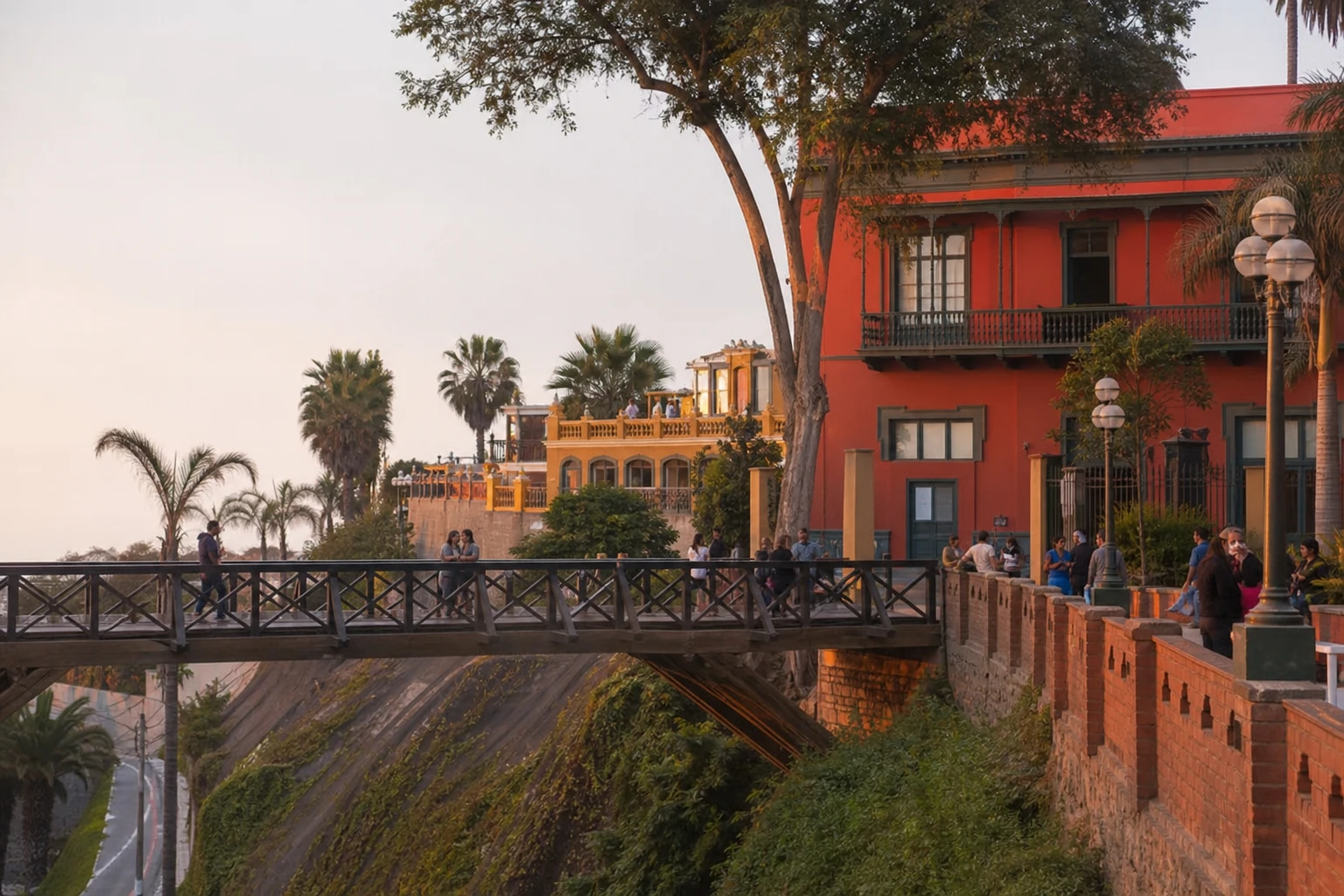
Barranco concentrates art, historic character, restaurants, bars and Pacific-facing walks into one of Lima’s most appealing neighborhoods. Its central landmarks are Parque Municipal and the Puente de los Suspiros, with the Bajada de los Baños leading toward coastal views. A visit can be a free self-guided walk, a museum-focused afternoon or a longer outing that continues through dinner and nightlife.
- Start around Parque Municipal and the Puente de los Suspiros.
- Explore murals, galleries or a museum during daylight hours.
- Continue down the Bajada de los Baños for the coastal side of Barranco.
- Allow extra time for cafés, restaurants and independent boutiques.
- Visit earlier if you prefer a calmer atmosphere or are traveling with young children.
- Plan your return transportation before staying late.
The public heart of Barranco is easy to appreciate without buying a ticket. Entry to Parque Municipal and the Puente de los Suspiros is free, while your total cost depends on transportation, museum admission, meals and evening plans. This makes the district flexible for both budget travelers and visitors planning a more elaborate day.

Lima Bike Tour in Miraflores & Barranco - Shared small group
Discover the most touristic districts of Lima by bike: Miraflores & Barranco. On this adventure you will be able to ride your bike for at least 10 mil...

Lima Ultimate Peruvian Food Tour
Discover one of Lima’s most interesting neighbourhoods – artsy and bohemian Barranco while sampling up to 14 Per...

Lima Gourmet Food Tour: Evening Experience
Lima food tour under the stars, the best of Lima in one evening. From a trendy beachfront cocktail featuring Peru’...

Miraflores, Barranco & San Isidro - Districts Tour (Small Group)
Discover the most beautiful and iconic areas of Lima in one unforgettable tour. Visit an ancient archaeological site...
How Barranco fits into a Lima itinerary
Barranco works especially well as a half-day or late-afternoon destination. Begin with the neighborhood’s public spaces, add a museum if cultural attractions are a priority, and reach the coastal side when the light softens. Staying for dinner changes the character of the outing because Barranco is also one of Lima’s established nightlife districts.
First-time visitors can pair Barranco with nearby Miraflores, although each district deserves enough time to explore on foot. The Miraflores Lima Travel Guide explains the neighboring district’s coastal and cultural attractions, while a 3 Days in Lima Itinerary can help place both areas within a broader city plan.
Barranco also complements Lima’s archaeological and historic attractions. Its murals, contemporary culture and social scene offer a different perspective from the monumental center and pre-Columbian sites. Travelers deciding how to divide limited time can compare these experiences through a broader guide to the best things to do in Lima.
The best time of day to visit Barranco
Daylight is best for seeing murals, visiting museums and following the streets around Parque Municipal, the bridge and the Bajada de los Baños. Later afternoon brings softer light to the Pacific-facing parts of the route. Evening is the natural choice for travelers interested in restaurants, bars and Barranco’s social atmosphere.
An earlier start suits families, photographers who want clear views of street art and visitors who prefer less nightlife activity. Museum visitors should build the day around the venue they most want to see, since schedules and admission arrangements can change. Check current information directly with the museum before committing to a tightly timed plan.
If sunset is your priority, leave enough time to explore the historic center of the neighborhood before heading toward the coast. The bridge, park, murals and side streets are worth seeing without rushing. After dark, keep your return simple by deciding how you will leave before settling into dinner or drinks.
A practical self-guided Barranco walking route
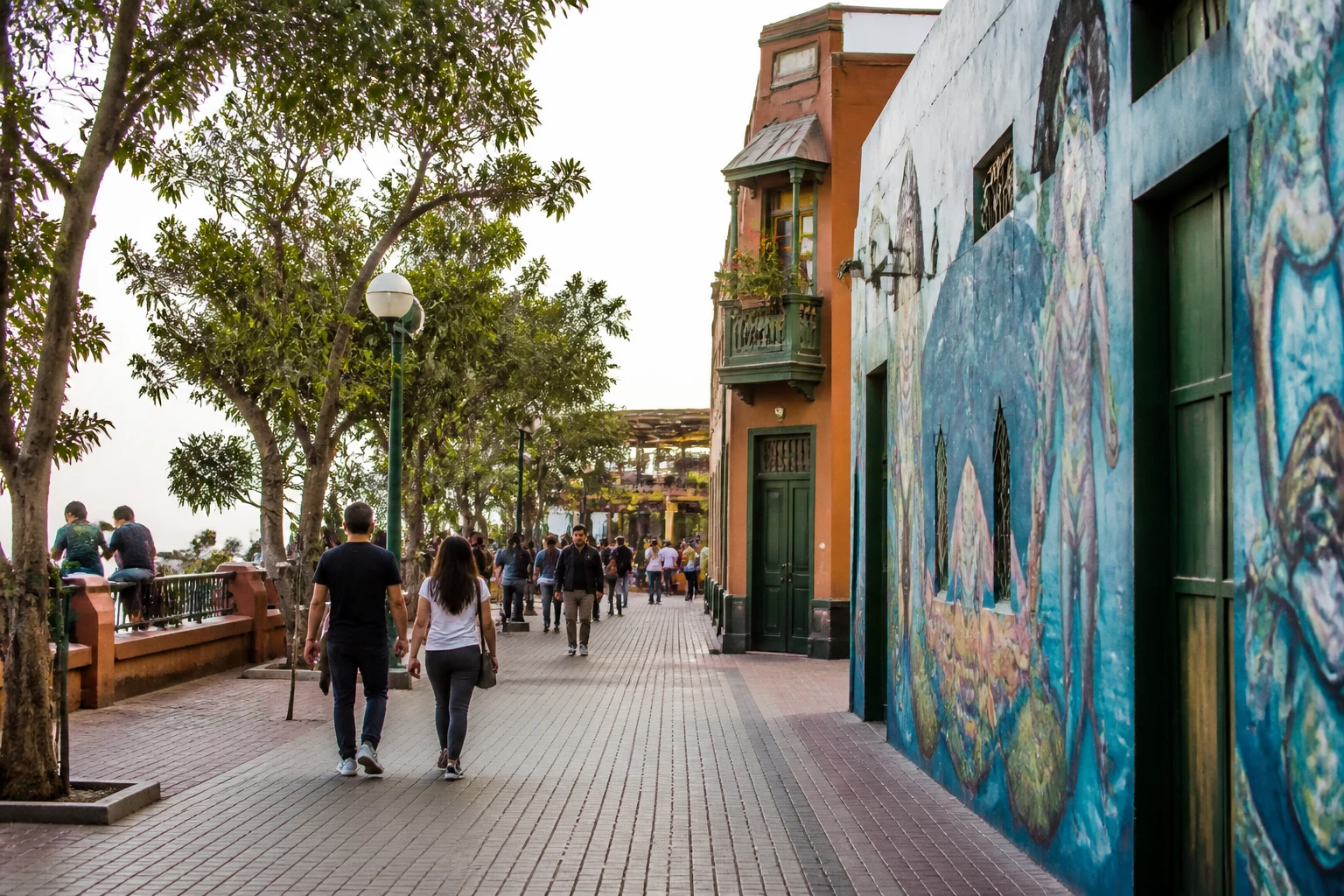
Begin at Parque Municipal, the most useful orientation point in central Barranco. The park places you close to the neighborhood’s principal public landmark, the Puente de los Suspiros, as well as streets associated with art, boutiques, restaurants and bars. Pause here to decide whether your route will emphasize museums, the waterfront or an unhurried circuit through the center.
- Start at Parque Municipal and look around the surrounding streets before moving on.
- Walk to the Puente de los Suspiros, one of Barranco’s central landmarks.
- Continue toward the Bajada de los Baños and follow the route in the direction of the sea views.
- Return through the neighborhood at a slower pace, leaving time for murals, boutiques and galleries.
- Add a museum before dinner if its current schedule fits your plan.
This route is intentionally flexible. Barranco rewards short detours, but the park, bridge and Bajada de los Baños provide a clear structure when the streets are unfamiliar. The core public walk is free, so you can adjust the outing around your energy, museum interests and dining budget.
Travelers who want a slower version can devote the first part of the visit to art and architecture, then stop for a meal before approaching the coastal side. A guided Barranco walking tour can provide additional context, but it is not required to reach the principal public sights.

Lima Gourmet Food Tour: Daytime Experience
This is the ultimate food and city tour. It includes exclusive restaurants, trendy districts, top must-see attractio...
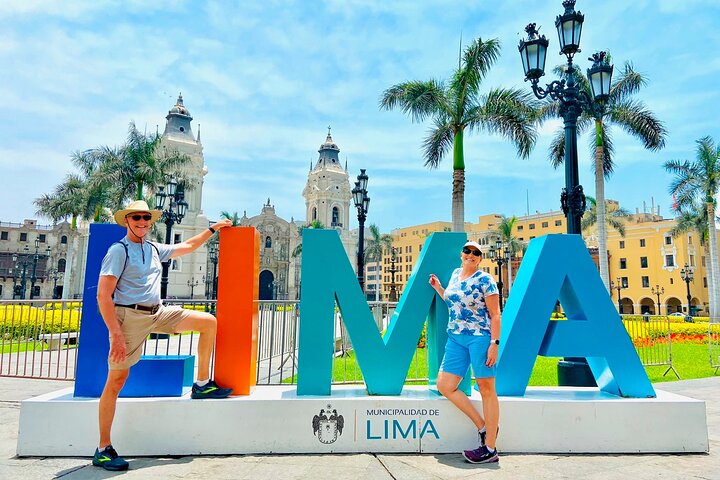
Lima Half-Day City Walking Tour (Small Groups)
Discover the city of Lima known as the "City of Kings"! We will visit the highlights of the Historic Center of Lima...

All-Inclusive Highlights of Lima Tour
This tour is special because in around 8 hours you will have the opportunity to explore the most beautiful places of...
Puente de los Suspiros, Parque Municipal and Bajada de los Baños
Parque Municipal and the Puente de los Suspiros form the natural center of a first Barranco visit. They are close enough to experience as part of one walking sequence, and neither requires an admission fee. Together they provide access to the district’s cultural streets and the route toward Bajada de los Baños.
The Bajada de los Baños gives the outing a sense of direction beyond the bridge. Following it toward the coastal side connects central Barranco with sea views and makes the route feel more complete. Allow enough time for the return, especially if a museum reservation or dinner plan follows.
These public landmarks can become busier as the day moves toward dinner and nightlife. Visitors who mainly want architecture, photographs and a relaxed family walk should prioritize daylight. Those interested in Barranco’s evening energy can use the same landmarks as a starting point before moving on to dining or entertainment.
Museums and art experiences in Barranco
Barranco supports more than a street-art walk. Two significant museum options are the Museo de Arte Contemporáneo, commonly known as MAC, at Avenida Grau 1511, and Museo Pedro de Osma at Avenida Pedro de Osma 421. Their different collections allow visitors to choose between a contemporary-art emphasis and a museum experience centered on the Pedro de Osma institution.
Do not build a museum day around an old admission figure or schedule. Ticket prices, visiting hours and entry procedures are changeable, so consult the museum’s current information before leaving. This is especially important if the museum is the main reason for visiting Barranco or if you have limited time between other reservations.
Street art adds a less structured layer to the district. Murals, galleries and independent boutiques are part of Barranco’s established artistic identity, and they fit naturally between the central park and the coastal route. Treat them as discoveries along the walk rather than as a fixed checklist.
Dining and nightlife without overplanning the evening
Restaurants and bars are central to Barranco’s appeal after dark. A practical plan is to complete the bridge, park, murals and coastal walk first, then choose dinner when you no longer need daylight. This avoids interrupting the sightseeing route and makes it easier to decide how late you want to stay.
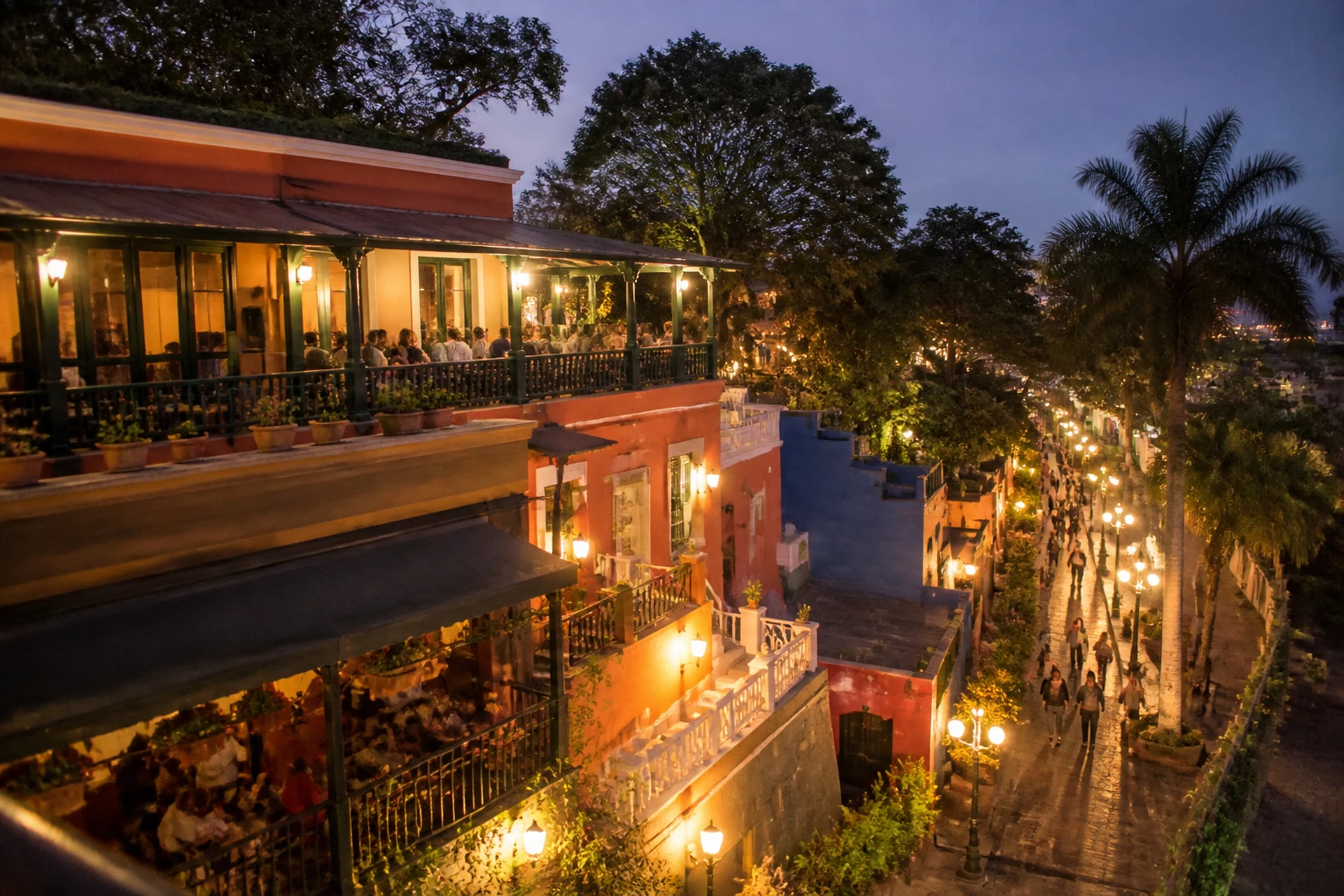
The evening atmosphere will not suit every trip. Families with young children and travelers looking for less activity should visit earlier and dine before the nightlife period becomes the focus. Late-night visitors should keep valuables controlled and arrange a straightforward return instead of improvising after leaving a venue.
Dining costs vary widely, so it is more useful to set a personal budget than to rely on a single neighborhood estimate. If ceviche is part of your Lima plans, a dedicated guide to where to eat ceviche in Lima can help you consider that meal within a wider city itinerary rather than limiting the search to one district.
Getting to Barranco and planning the return
Check current transportation routes and fares shortly before traveling. Service details, stops and access arrangements can change, and a dependable current journey time should not be assumed for an airport transfer or a cross-city trip. Leave extra time when connecting Barranco with a reservation elsewhere in Lima.
Visitors coming from Miraflores can consider the broader tourism corridor between the districts. The corridor has continued to develop, and Puente de la Paz opened to the public in August 2025. Confirm its current access points and route conditions before relying on it as the centerpiece of your walk.
Return planning matters most after dinner or drinks. Save the address of your accommodation, keep enough battery for navigation and transportation, and avoid depending on a last-minute route you have not checked. The guide to Lima safety, taxis and coastal fog provides broader first-timer logistics for moving around the city.
Still comparing Barranco Lima Walking Tour?
Ask for tour ideas, hotel suggestions, or a simple trip plan that combines both.
Trip Helper
How much does a visit to Barranco cost?
A basic Barranco walk can cost very little because Parque Municipal and the Puente de los Suspiros have free entry. The main variables are transportation, food, drinks, shopping, museum tickets and any guided experience. Travelers controlling expenses can focus on the public route and choose one paid addition.
| Expense | Planning approach |
|---|---|
| Public landmarks | Parque Municipal and the Puente de los Suspiros are free to enter. |
| Museums | Check current admission details directly with the selected museum. |
| Transportation | Review current routes and fares before traveling. |
| Food and nightlife | Set a personal budget based on the type of meal or evening planned. |
| Guided activities | Compare the stated duration, meeting point and inclusions before booking. |
Avoid assuming that an older museum price still applies. If cost is a deciding factor, confirm admission before arranging transport. The free public core ensures that a changed museum plan does not have to cancel the entire outing.
Accessibility and route conditions
Accessibility varies by route and venue. The Miraflores–Barranco tourism corridor has received a TUR4all accessibility distinction, including the Parque Salazar–Paseo Sáenz Peña section. That recognition should not be interpreted as confirmation that every street, bridge approach, historic route, museum, restaurant or nightlife venue in Barranco is step-free.

Travelers with mobility requirements should verify the precise path they intend to use, especially around the Bajada de los Baños and approaches to the bridge. Confirm entrances, gradients and restroom access directly with individual museums and businesses. A route suitable in Miraflores does not automatically guarantee equivalent conditions throughout central Barranco.
A shorter plan centered on Parque Municipal can reduce unnecessary backtracking. Choose one museum or coastal objective rather than trying to cover every part of the district, and allow time to change course if the preferred approach is unsuitable.
Safety and practical visitor habits
Use normal big-city precautions in Barranco. Keep phones and wallets controlled in busy areas, pay attention when taking photographs and avoid displaying unnecessary valuables. These habits are sensible without making assumptions about a specific current risk level.
Nighttime planning deserves particular attention because Barranco and Miraflores are established nightlife areas. Decide on transportation before staying late, keep your accommodation details available and remain aware of your surroundings when leaving restaurants or bars. Travelers with children or an early start the next day will often find a daytime visit more convenient.
Barranco Municipality lists a tourist-information office at the Municipal Library in Parque Municipal. Its published weekday hours are 8:00 a.m. to 5:00 p.m., but municipal service hours can change. Check the current schedule if you plan to use the office for local guidance.
Sample half-day and full-day plans
A focused half-day visit
- Arrive in daylight and begin at Parque Municipal.
- Visit the Puente de los Suspiros and continue toward Bajada de los Baños.
- Explore murals, boutiques and side streets on the return.
- Finish with a café stop, meal or coastal view before leaving.
A longer art and evening itinerary
- Begin with MAC or Museo Pedro de Osma after confirming current visitor details.
- Continue to Parque Municipal and the bridge.
- Walk toward the coastal side in the later afternoon.
- Return to central Barranco for dinner.
- Stay for nightlife only if it suits your group, then use the return plan arranged earlier.
Do not make the longer plan so rigid that one delayed museum visit disrupts the day. The public landmarks require no admission fee, so they can act as the dependable backbone of the itinerary. Food, museums and nightlife can then be adjusted around current schedules and personal interest.

Private Full-Day Best of Lima Tour
For the traveler who only has one day to spare in the capital city, this is the perfect tour for you! We'll cover al...

Paracas and Huacachina Exclusive Sunset Picnic Tour
THE MOST COMPLETE AND EXCLUSVE DAY TRIP FROM LIMA IN A LUXURY BUS. 1) 2 HOUR BALLESTAS ISLANDS: visit wild marine l...

Lima : Paracas & Huacachina- Day to Islas Ballestas & Sandboard
Don't let time constraints in Lima stop you from visiting Huacachina and Paracas. See the desert oasis and natural s...
Is Barranco a good place to stay?
Barranco will appeal most to travelers who value art, restaurants, bars and neighborhood atmosphere. Staying nearby can make evening plans easier, but the district’s nightlife identity is an important tradeoff for light sleepers, families and visitors who prefer to end each day early.
Miraflores and San Isidro offer different settings and may fit other priorities. The comparison Where to Stay in Lima: Miraflores, Barranco, or San Isidro? helps travelers weigh neighborhood character before booking. Check the exact location of any accommodation rather than judging convenience from the district name alone.
Making the most of Barranco
Barranco is most rewarding when treated as a neighborhood rather than a single-photo stop. Use Parque Municipal, the Puente de los Suspiros and Bajada de los Baños as the route’s backbone, then add art, a museum or dinner according to your interests. Daylight gives the clearest introduction, while evening adds the district’s social side.
Its main limitation is variability. Museum details, transportation arrangements and accessibility conditions require current checks, particularly for a tightly scheduled or mobility-sensitive visit. Once those essentials are settled, Barranco offers a flexible Lima outing with a strong free public core and plenty of room for personal discoveries.
Frequently asked questions
What is Barranco in Lima known for?
Barranco is known as Lima’s bohemian district, with murals, museums, boutiques, restaurants, bars and coastal walks. Parque Municipal, the Puente de los Suspiros and Bajada de los Baños form the core sightseeing route.
Is the Puente de los Suspiros free to visit?
Yes. Official tourism material lists free entry for the Puente de los Suspiros and Barranco’s Parque Municipal. Transportation, food, museums and guided activities are separate expenses.
How much time should I spend in Barranco?
A half-day is enough for the park, bridge, murals and coastal route. Allow longer if you want to visit a museum, have dinner or experience the neighborhood’s nightlife.
Is Barranco better during the day or at night?
Daytime is best for murals, museums and the main walking route, while evening suits dining and nightlife. Families and visitors seeking less activity will generally prefer an earlier visit.
Which museums can I visit in Barranco?
Barranco’s museum options include the Museo de Arte Contemporáneo at Avenida Grau 1511 and Museo Pedro de Osma at Avenida Pedro de Osma 421. Check current opening details and admission prices directly before visiting.
Is Barranco accessible for wheelchair users?
Accessibility depends on the exact route and venue. Part of the Miraflores–Barranco tourism corridor has received a TUR4all distinction, but this does not confirm step-free access throughout central Barranco, the bridge approaches or individual businesses.
Where can I find tourist information in Barranco?
Barranco Municipality lists a tourist-information office at the Municipal Library in Parque Municipal. Published weekday hours are 8:00 a.m. to 5:00 p.m., but check the current municipal schedule before relying on the office.
Lima Bike Tour in Miraflores & Barranco - Shared small group
Discover the most touristic districts of Lima by bike: Miraflores & Barranco. On this adventure you will be able to ride your bike for at least 10 mil...
Lima Ultimate Peruvian Food Tour
Discover one of Lima’s most interesting neighbourhoods – artsy and bohemian Barranco while sampling up to 14 Per...
Lima Gourmet Food Tour: Evening Experience
Lima food tour under the stars, the best of Lima in one evening. From a trendy beachfront cocktail featuring Peru’...
Miraflores, Barranco & San Isidro - Districts Tour (Small Group)
Discover the most beautiful and iconic areas of Lima in one unforgettable tour. Visit an ancient archaeological site...