Best Lima Food Tours
The best Lima food tour is the one that matches how you like to eat and explore. Market walks deliver variety and street-level energy. Historic Center routes add architecture and cultural context. More focused experiences suit travelers who would rather linger over ceviche or explore a smaller number of carefully chosen stops.
Lima’s food scene is too broad for a single tour format to cover everything. Peru’s official tourism site highlights restaurants, cevicherías, markets, huariques, and chifas among the city’s culinary venues. A good first step is deciding whether your priority is tasting breadth, neighborhood exploration, seated dining, or personal attention from a private guide.
- Choose a market tour for numerous tastings and an energetic introduction to everyday food culture.
- Pick a Historic Center route when food and urban history matter equally.
- Look for a smaller or private tour if you prefer a flexible pace and fewer transitions.
- Confirm dietary needs, walking demands, meeting points, and transportation before paying.
- Compare the actual tasting list rather than choosing by tour name alone.
- Leave room in your schedule and your appetite for a full tasting itinerary.
Do not assume that every outing marketed as a food tour offers the same kind of afternoon. One route can revolve around market counters and handheld snacks, while another can feel closer to a progressive meal. The sections below compare the most useful tour styles without assigning an unsupported operator ranking.
How to choose a Lima food tour
Start with the neighborhood and route. A tour through central Lima can combine markets, Chinatown, historic streets, and the main square. A market-centered outing usually concentrates more heavily on produce, prepared dishes, and conversations about ingredients. A narrower ceviche experience trades variety for a deeper look at one of the city’s signature food traditions.
Next, examine how the food is served. Numerous small bites reward adventurous eaters who want contrast, but the repeated stopping and walking can feel rushed to someone expecting a relaxed lunch. Seated stops generally provide more breathing room, while standing market tastings place the activity closer to the movement and sounds of daily commerce.
Finally, read the logistics as carefully as the menu. Check the total duration, meeting point, finishing location, pickup area, walking expectations, group format, cancellation terms, and included drinks. Tour descriptions change, and a convenient pickup can be more valuable than one additional tasting when your available time is limited.
Best Lima food tour styles by traveler type
| Tour style | Best suited to | Main advantage | Question to ask |
|---|---|---|---|
| Market tasting walk | Curious eaters seeking variety | A broad introduction to ingredients and prepared dishes | How much walking and standing is involved? |
| Historic Center food tour | Travelers combining food with sightseeing | Tastings paired with central-city neighborhoods and landmarks | Where does the route finish? |
| Ceviche-focused experience | Seafood enthusiasts | More attention on a defining part of Lima’s food culture | Can dietary restrictions be accommodated? |
| Private culinary tour | Families and travelers wanting flexibility | Potential for a pace shaped around the group | Which details can actually be customized? |
| Seated restaurant-led tour | Travelers who prefer comfort over tasting volume | Fewer transitions between stops | How many dishes and drinks are included? |
Market walks for the widest tasting range
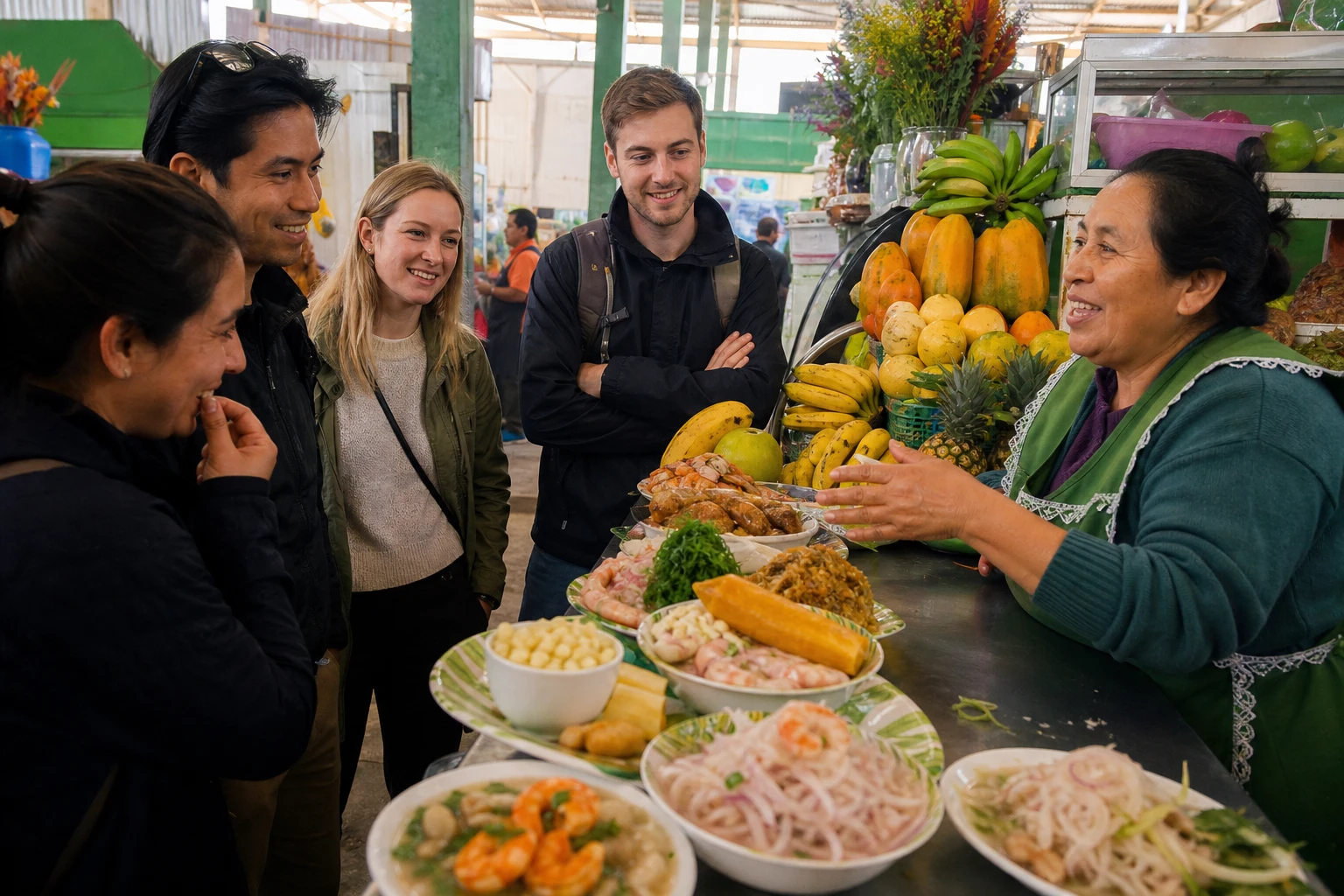
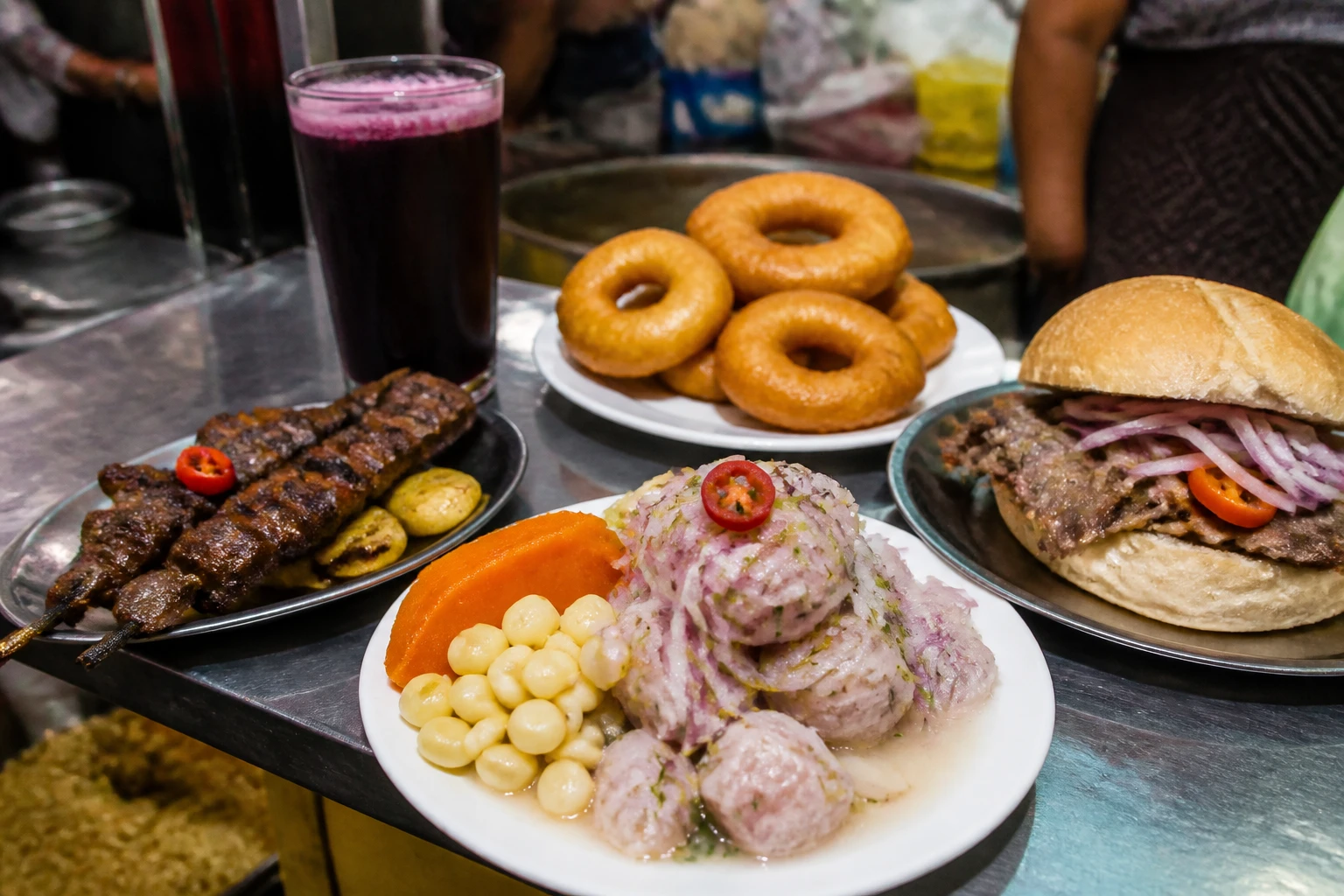
A market walk is the strongest match for travelers who want to sample many flavors in a limited period. One documented central-city itinerary includes ceviche, chicha morada, Chinese-Peruvian snacks, anticuchos, picarones, juice, and pan con chicharrón. That range turns the route into a compact introduction rather than a conventional multi-course meal.
Market experiences also suit visitors interested in how dishes connect with ingredients and neighborhoods. They are less appropriate for anyone who wants long seated breaks or minimal walking. For a closer look at another market-centered option, the Mercado Surquillo food tour subject is a useful companion when comparing central Lima with a different market setting.
Historic Center routes for food and city context
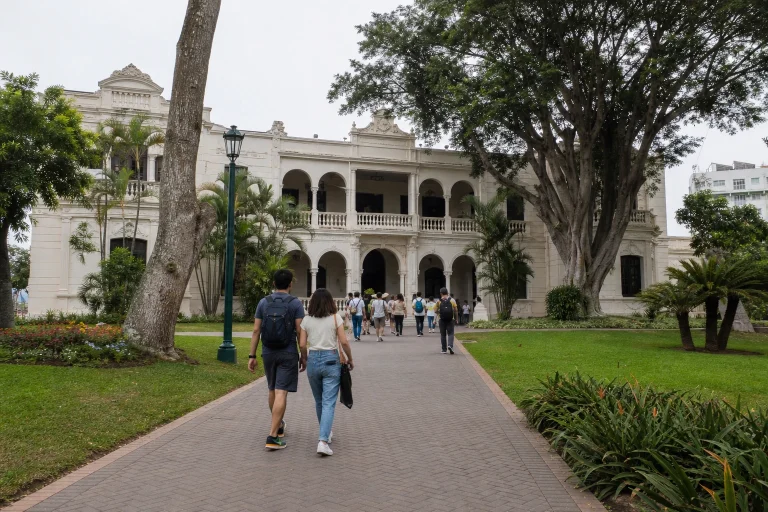
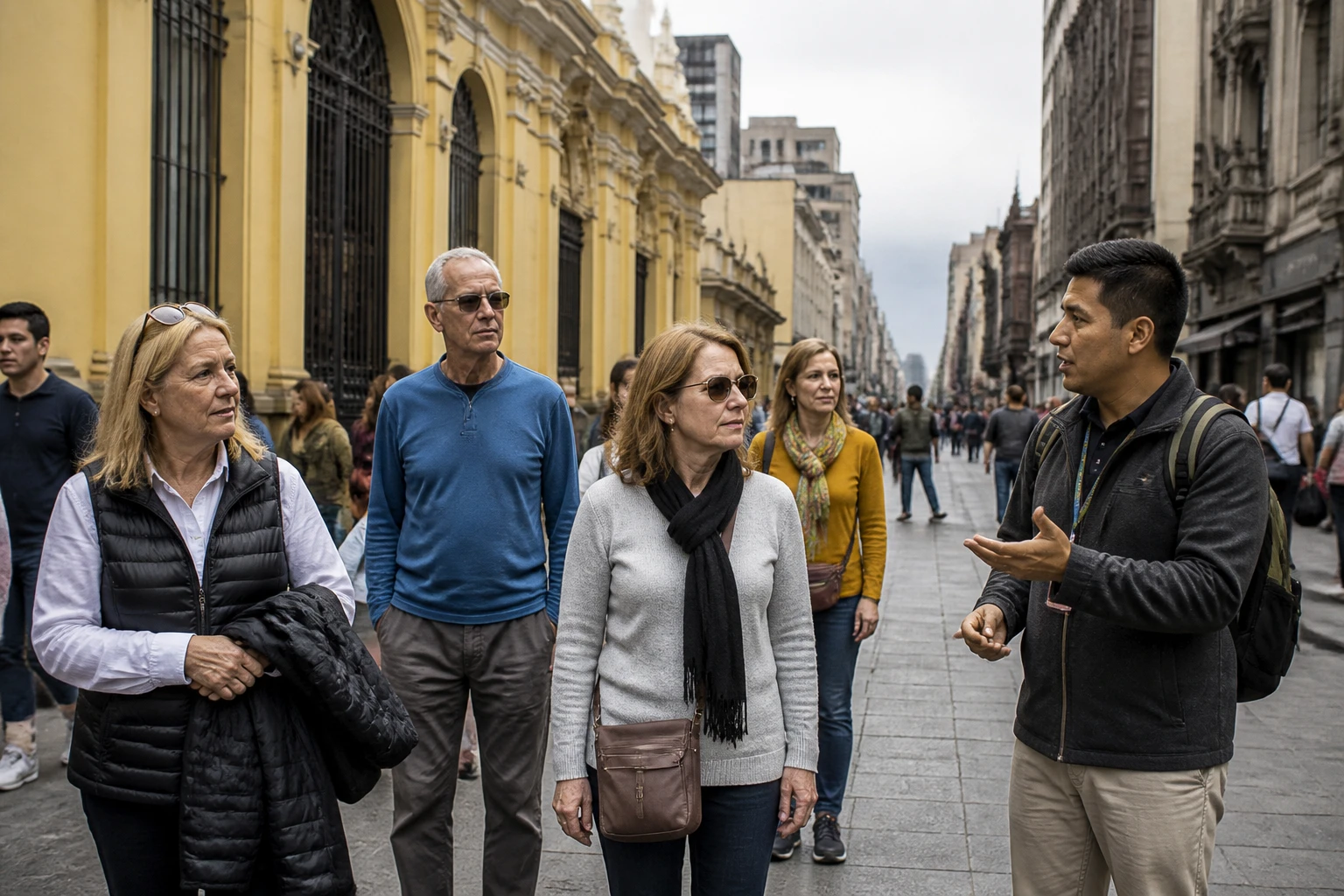
Choose a Historic Center food route when the streets between tastings matter as much as the dishes. A published itinerary follows parts of Abancay Avenue, Barrios Altos, Chinatown, the Central Market, Chinitos, and the main square. This format can help a first-time visitor connect Lima’s food culture with distinct central-city areas in one outing.
The tradeoff is pace. Covering several neighborhoods and a long tasting list creates more transitions than a restaurant-led experience. Travelers who want to understand the area beyond its food can also review the Historic Center walking route subject before deciding whether to combine sightseeing and tastings or schedule them separately.
Still comparing Food Tours?
Ask for tour ideas, hotel suggestions, or a simple trip plan that combines both.
Trip Helper
Focused ceviche experiences for seafood enthusiasts
A focused food outing works well when one culinary tradition matters more than sheer variety. Lima’s wider food landscape includes cevicherías alongside markets, restaurants, huariques, and chifas. A ceviche-centered plan can therefore provide a narrower lens than a market crawl, which is helpful if you already know what you most want to taste.
Before booking, check whether the experience includes only a tasting or a more substantial serving, and ask how non-seafood needs are handled. Travelers planning their own comparison can use the subject of where to eat ceviche in Lima as a practical starting point for deciding between a guided tasting and an independent meal.
Private and seated tours for a gentler pace
Travelers who dislike frequent stops should prioritize tours with seated tastings, a smaller group, or private guiding. A private label does not automatically guarantee customization, however. Ask which parts of the route can change and whether the operator can adjust the pace, menu, starting point, or transportation arrangements.
This style is especially worth considering for families, travelers with limited stamina, and groups with several dietary requirements. Confirm the precise setup rather than relying on a broad description such as private or premium. The practical value lies in flexibility and comfort, not in an unverified claim that one format is inherently better.
A documented Historic Center and market itinerary
One operator-published example provides a useful picture of a high-volume Lima tasting tour. The itinerary describes a Historic Center and market experience labeled as 3.5 hours. Its listed schedule has guests meet at ICPNA Centro at 1:15 p.m., begin at 1:30 p.m., and finish at 5:15 p.m. Because schedules are volatile, confirm the timing shown during booking.
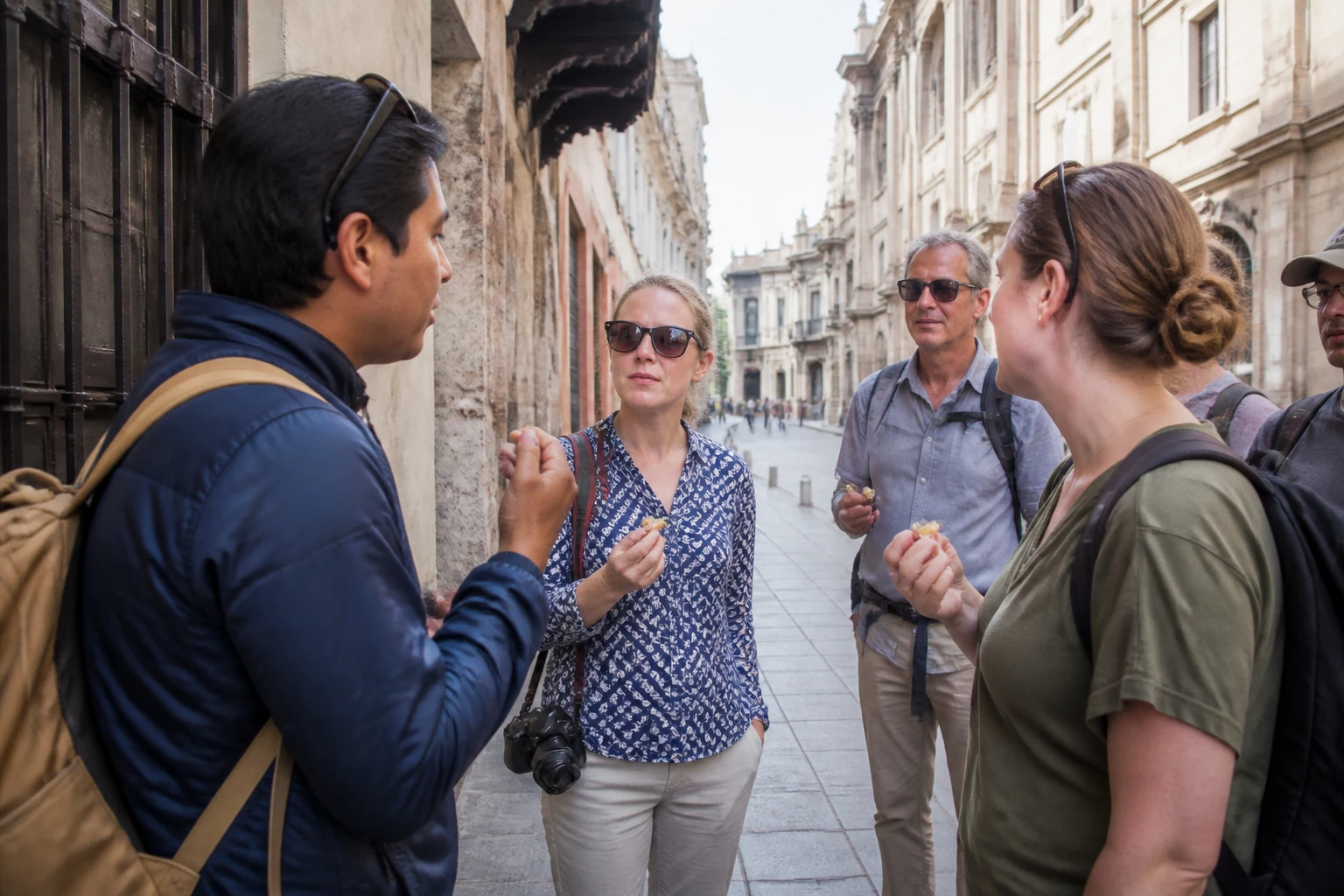
The route covers Abancay Avenue, Barrios Altos, Chinatown, the Central Market, Chinitos, and the main square. Optional accommodation pickup and drop-off are offered for Miraflores, Barranco, downtown Lima, and San Isidro. Check whether transportation is included in the option selected and whether its timing fits your plans before and after the tour.
Its tasting list includes ceviche, chicha morada, Chinese-Peruvian snacks, anticuchos, picarones, juice, and pan con chicharrón. That combination makes the itinerary a strong example of breadth-focused touring. It is less naturally suited to a traveler seeking a leisurely seated lunch, limited walking, or extended attention to a single dish.
What you could taste on a broad Lima food route
A broad tasting route can move rapidly between savory dishes, drinks, snacks, and sweets. In the documented central-city example, ceviche appears beside chicha morada, anticuchos, picarones, juice, Chinese-Peruvian snacks, and pan con chicharrón. The appeal comes from contrast, with each stop opening a different window onto the city’s food culture.
- Ceviche for a seafood-focused tasting
- Chicha morada as a drink stop
- Anticuchos among the savory items
- Picarones for a sweet finish or interlude
- Chinese-Peruvian snacks connected with the Chinatown portion of the route
- Pan con chicharrón and juice as additional substantial tastings
Menus are not interchangeable between operators, dates, or neighborhoods. Treat a published list as the clearest indication of a tour’s personality, then verify the current inclusions on the booking page. If one particular dish is essential to your decision, make sure it is explicitly listed rather than assuming every Lima food tour serves it.
How to compare tours before booking
A useful comparison goes beyond the headline duration. Two tours of similar length can feel completely different if one packs in numerous market tastings and another includes several seated courses. Count the stops, look at how far the route spreads, and identify whether transportation time sits inside or outside the advertised activity window.
- Read the full tasting list and note whether portions are samples or meal-sized servings.
- Locate the meeting and finishing points before fitting the tour into your day.
- Check whether hotel transportation is included, optional, or unavailable.
- Review the expected walking, standing, stairs, seating, and restroom arrangements.
- Send dietary and accessibility questions before booking.
- Compare current totals and cancellation terms directly on the checkout page.
Compare current prices, not old estimates
Prices can change with the date, group size, transportation option, and booking format. Check the current booking page for the total rather than relying on an old article or an uncited price range. Compare what is included, especially pickup, drinks, and the number of tastings, before describing one tour as cheaper or better value.
Check where the tour begins and ends
A central meeting point can be straightforward once you know the exact entrance, but the end location also matters. Save both places before leaving your accommodation. When pickup is available, verify its coverage and whether the return goes to your hotel or a central drop-off. The documented market itinerary offers optional service in four commonly used areas, but that arrangement belongs to that specific product.
Dietary needs, mobility, and comfort
Tell the operator about allergies and dietary restrictions before booking, not when the first plate arrives. Ask which tastings can be substituted and whether avoiding an ingredient changes the amount of food included. A tour with diverse dishes can still have repeated ingredients, preparation methods, or shared kitchen environments that matter to an individual guest.
Do not interpret the word walking as a complete accessibility description. The operator material for the documented central route does not specify step-free access, wheelchair suitability, walking distance, restroom arrangements, or support for sensory and mobility needs. Accessibility can vary with the route and local infrastructure, so obtain confirmation in writing before committing to a booking.
Ask practical questions that match your needs: how long guests stand, whether seating appears at each stop, whether stairs are unavoidable, and where restrooms are available. Travelers sensitive to noise or crowded indoor environments should also ask the operator to describe the market portions of the route. Specific answers are more useful than a generic accessible label.
Safety and street awareness during a food tour
Peru is listed at Level 2, Exercise Increased Caution, by the U.S. State Department because of crime, civil unrest, and kidnapping risk. The advisory notes that theft, robbery, assault, and other violent crime can occur in daylight and in public. This is country-level guidance and does not mean that Lima food tours are categorically unsafe.
The UK travel advice current on July 24, 2026, warns against all but essential travel to specified parts of Peru rather than Lima generally. Conditions and demonstration routes can change, so check current official advice and messages from your operator shortly before the tour. A guide can alter a route if local conditions affect a planned stop.
Carry only what you need, keep your phone and wallet secure, and avoid becoming separated from the group while moving between stops. Save the meeting point and operator contact details offline. The subject of Lima safety and transport tips can help with the wider logistics of reaching a tour and returning to your accommodation.
Fitting a food tour into your Lima itinerary
Treat a high-volume tasting tour as a meal rather than a light snack. The documented market itinerary includes several savory items, a sweet item, and drinks, so placing a large restaurant reservation immediately afterward could diminish both experiences. A lighter meal before the tour gives the tasting list enough room to make sense.
Leave a buffer before any fixed evening event. Meeting, starting, and finishing times are separate details, and optional accommodation transportation can add another stage. If your tour ends in the Historic Center, decide in advance whether you plan to remain nearby or return directly to your lodging.
Travelers with only a short Lima stay should choose a route that complements rather than duplicates other plans. A central food walk pairs naturally with an interest in historic streets. A market-focused outing works better when produce and everyday food culture are the priority. A focused ceviche experience leaves more time for museums, coastal districts, or another meal.
Which Lima food tour is best for you?
Choose a market and Historic Center route for maximum variety and a strong sense of movement through the city. Choose a focused tasting when one culinary tradition matters most. Choose a private or seated format when flexibility, conversation, and physical comfort outweigh the desire to visit numerous stops.
The main limitation of a broad tasting tour is its pace. More dishes and neighborhoods usually mean less time at each stop. Read the route and menu together, confirm any essential dietary or mobility arrangements, and check the live price and inclusions. That approach will identify a better match than any unsupported one-size-fits-all ranking.
Frequently asked questions
What is the best type of food tour in Lima for first-time visitors?
A market or Historic Center tasting tour is a strong choice for first-time visitors who want broad exposure to Lima’s food culture. One documented route combines central neighborhoods with ceviche, drinks, savory snacks, sweets, and market stops, although its active pace will not suit everyone.
How long do Lima food tours take?
Duration depends on the route and format. One operator describes its Historic Center and market tour as 3.5 hours, with a listed meeting time of 1:15 p.m., a 1:30 p.m. start, and a 5:15 p.m. finish. Confirm the current schedule before booking.
What foods are included on a Lima food tour?
The menu depends on the operator and neighborhood. A documented central Lima itinerary includes ceviche, chicha morada, Chinese-Peruvian snacks, anticuchos, picarones, juice, and pan con chicharrón. Check the current tasting list if a particular dish matters to you.
Do Lima food tours include hotel pickup?
Some tours offer pickup, but it depends on the product selected. One published itinerary offers optional accommodation pickup and drop-off from Miraflores, Barranco, downtown Lima, and San Isidro. Review your selected option and confirmation for exact arrangements.
Are Lima food tours wheelchair accessible?
Accessibility must be confirmed for the specific route. Available operator material does not establish step-free access, wheelchair suitability, walking distance, restroom access, or other mobility accommodations, and local infrastructure can affect what is possible.
How much does a Lima food tour cost?
Prices vary by operator, date, group format, and included transportation. Check the live booking page for the current total and compare the number of tastings, drinks, pickup arrangements, and cancellation terms rather than relying on an old estimate.
Are Lima food tours safe?
A guided food tour can provide a structured way to explore, but normal city awareness remains important. Peru is under a U.S. Level 2 advisory, while current UK advice does not place Lima generally within its specified all-but-essential-travel areas. Check official advice and operator updates before departure.