Plaza Mayor Lima Guide
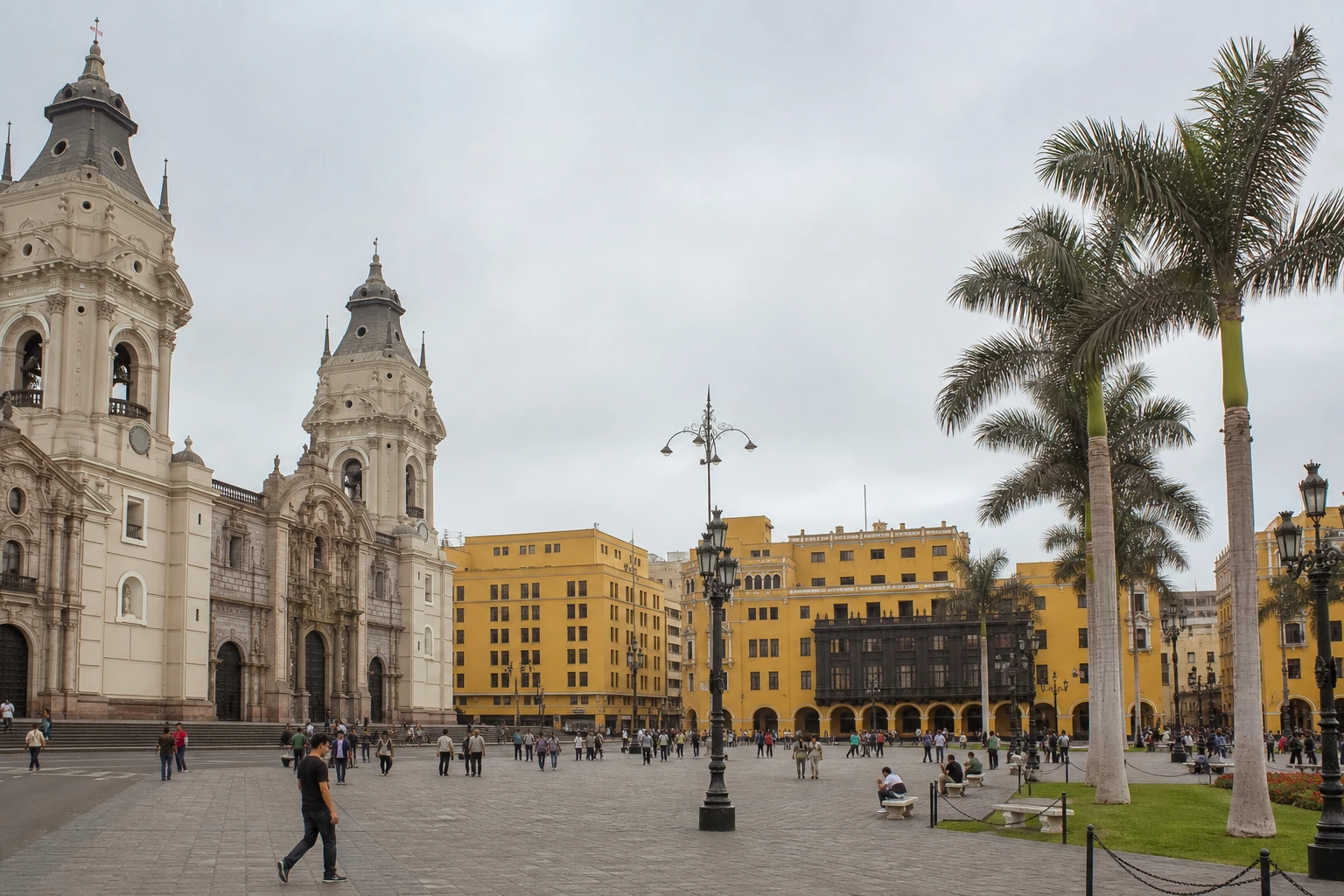
Plaza Mayor, also called Plaza de Armas, is the ceremonial heart of Lima’s Historic Centre. The Government Palace, Lima Cathedral, Archbishop’s Palace, and Municipal Palace frame the square, creating a compact introduction to the institutions that shaped the capital. Visit during the day, allow time to study the surrounding façades, and treat entry into each building as a separate plan.
- Plan Plaza Mayor as a daytime stop in Lima’s Historic Centre.
- Allow extra time because surrounding buildings have separate access rules and schedules.
- Use the square as the starting point for a broader walk through central Lima.
- Check local conditions before leaving, since demonstrations or security operations can restrict access.
- Expect an exterior sightseeing stop unless you separately arrange entry to a nearby landmark.
- Confirm accessibility directly with any building you plan to enter.
The square works best for travelers interested in architecture, civic history, and walkable sightseeing. Its main strength is concentration. Several of Lima’s most prominent religious and government buildings stand around one open space, so visitors can understand the city’s historic power structure without crossing a large district.
Lima Half-Day City Walking Tour (Small Groups)
Discover the city of Lima known as the "City of Kings"! We will visit the highlights of the Historic Center of Lima such as the Plaza de Armas, the Ca...

Lima Shore Excursion: Pachacamac and City Tour from Callao Port
Let yourself be surprised with this beautiful trip to ancient Peru, with the best places full of history and culture. Together we will discover the mo...
The main limitation is access. Plaza Mayor is primarily an outdoor orientation point, while the surrounding interiors follow their own rules. Security operations, public events, or temporary protective measures can also alter pedestrian circulation and photography. Keep the day flexible rather than arranging an itinerary that depends on uninterrupted access at an exact time.
Why Plaza Mayor matters to Lima
Plaza Mayor sits at the center of a historic district shaped by Lima’s former role as the political, administrative, religious, and economic capital of the Viceroyalty. That history remains visible in the arrangement of the square. Government, church, and municipal authority occupy neighboring sides, turning the plaza into a readable plan of colonial-era civic life.
You do not need to enter every building to understand that relationship. Stand where you can survey the full perimeter, identify each institution, and notice how closely civic and religious spaces were placed. A slow circuit gives more context than a quick photograph taken from one corner.
For a wider explanation of the district, pair this visit with a broader Historic Centre of Lima guide. Plaza Mayor is the clearest starting point, but the historic core extends beyond the buildings immediately facing the square.
What to see around Plaza Mayor
Four landmark institutions define the visit: the Government Palace, Lima Cathedral, Archbishop’s Palace, and Municipal Palace. Together, their façades explain why the square remains such a useful orientation point. Start with one full circuit before deciding which building deserves closer attention or a separate interior visit.
Government Palace
The Government Palace forms part of the plaza’s civic setting. View it as one element in the larger composition rather than assuming public interior access. Security arrangements can influence how closely visitors can approach government buildings, especially during heightened controls or possible mobilizations in central Lima.
Lima Cathedral and the Archbishop’s Palace
Lima Cathedral and the Archbishop’s Palace represent the religious authority historically concentrated around the plaza. Their presence opposite neighboring civic institutions makes this side of the square important even for visitors who remain outdoors. If you want to enter, check the current rules, hours, reservations, and fees for the specific property rather than relying on a general plaza schedule.
Municipal Palace
The Municipal Palace is another major façade on the square. A national tourism inventory describes free guided visits lasting about 40 minutes, making it a possible addition to your walk. Do not assume the information applies every day or extends to other buildings. Confirm the Municipal Palace’s current arrangements before structuring your visit around a tour.
A simple way to explore the square
Begin with a complete lap of the plaza. The first circuit helps you identify the principal buildings and note any barriers, controlled areas, or temporary changes. On a second pass, pause for photographs and closer views. This two-stage approach prevents one impressive façade from distracting you from the square’s overall design.
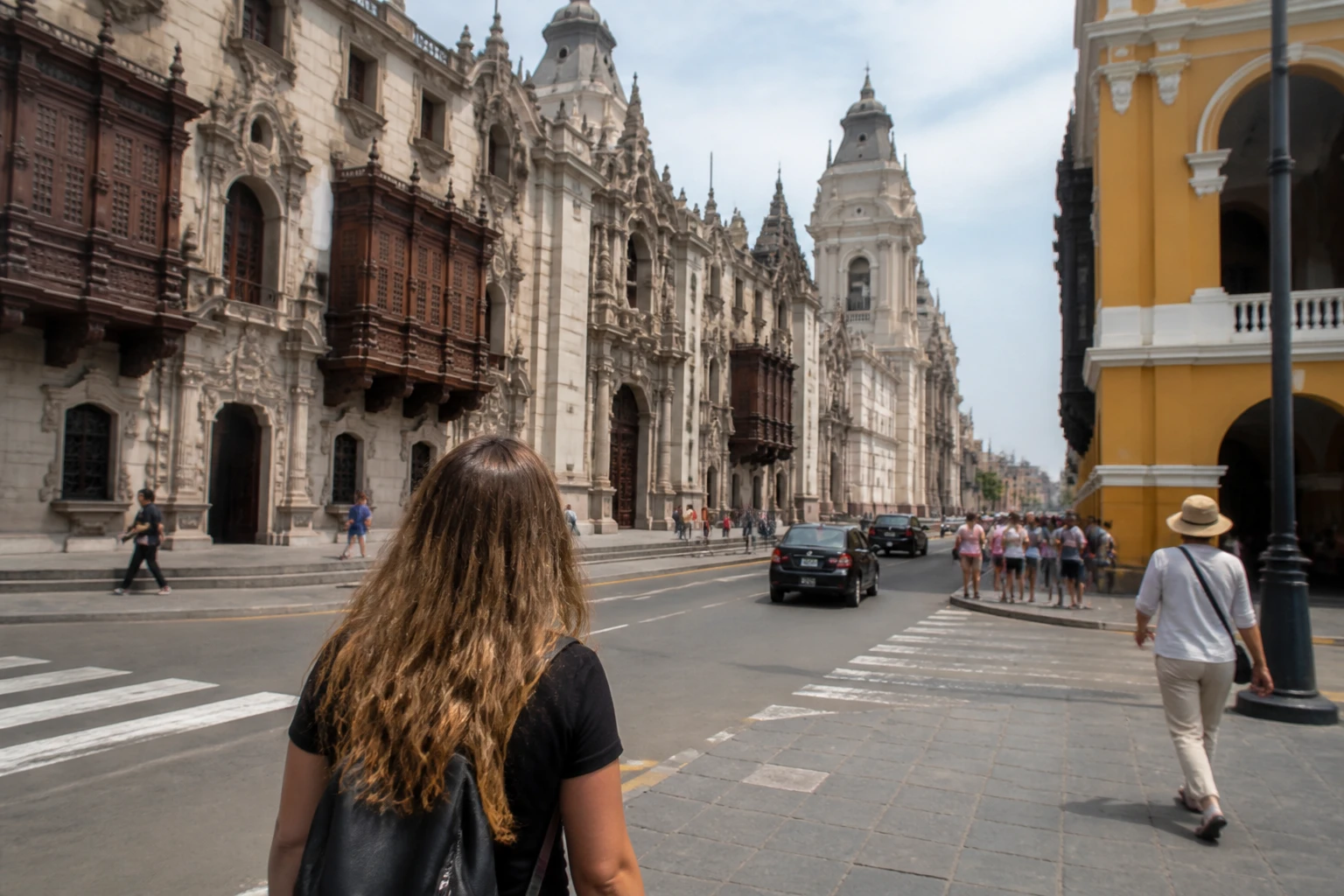
- Survey the full plaza before choosing a building to examine closely.
- Identify the Government Palace, Cathedral, Archbishop’s Palace, and Municipal Palace.
- Check entrances and posted instructions only for the interiors you intend to visit.
- Complete a second circuit for architectural details and photographs.
- Continue into the Historic Centre only after checking that surrounding streets remain accessible.
Travelers who want a longer outing can continue with a Historic Center walking route after surveying the square. Keep the sequence adaptable. An entrance that looks convenient on a map can be affected by security controls, a public event, or temporary conservation work.
Avoid packing several timed interior visits back to back. Nearby attractions do not share one operating schedule, and some require advance coordination. A flexible plan lets you spend longer outside if an interior is unavailable, then continue through the surrounding historic streets without losing the day.

Private Full-Day Best of Lima Tour
For the traveler who only has one day to spare in the capital city, this is the perfect tour for you! We'll cover al...

Lima: Palomino Islands Excursion & Swimming with Sea Lions with Hotel Transfers
Come enjoy a 2.5-hour speedboat excursion to 05 different islands into the Pacific Ocean with a swimming experience...

Private Tour to the Astonished Nazca Lines and Huacachina Oasis
Fly from Ica to Nazca to avoid the long hours of travel! With this experience you will only have to travel for 3 ho...
Best time and how long to allow
Plan your Plaza Mayor visit during the day. Daylight makes it easier to understand the square’s layout, compare the façades, read on-site instructions, and adjust if security barriers change your route. A daytime visit also fits more naturally with the separate schedules used by nearby institutions.
There is no single visit length that suits everyone. A traveler interested mainly in exterior views can complete a focused circuit, while architecture enthusiasts can linger over individual buildings. Any guided visit or interior admission adds a separate block of time. The Municipal Palace tour described in the tourism inventory lasts approximately 40 minutes, subject to current availability.
Build some slack into the day. Plaza Mayor is valuable as an orientation stop, but it is a poor place for a minute-by-minute schedule because building access and central-city controls can change independently. If the square forms part of a 3 Days in Lima itinerary, place it within a flexible Historic Centre period rather than between tightly timed reservations.
Admission, opening hours, and interior visits
Treat Plaza Mayor as an exterior public-space stop rather than a ticketed attraction with one published timetable. Do not assume that the square and the buildings around it share hours, prices, or entry conditions. Each institution controls its own interior access.
| Part of the visit | How to plan |
|---|---|
| Plaza Mayor exterior | Visit during the day and allow flexibility for changing circulation. |
| Government Palace | Treat interior access and security rules as separate from the plaza. |
| Lima Cathedral | Check current visitor hours, entry rules, and any fee for the cathedral itself. |
| Archbishop’s Palace | Check the property’s own current access arrangements. |
| Municipal Palace | Confirm whether guided visits are operating and whether advance coordination is needed. |
This distinction matters when comparing tours. A Historic Centre walking tour can include Plaza Mayor as an outdoor stop without including admission to every landmark. Before booking, read the itinerary for named interiors, entrance fees, meeting instructions, and the amount of time assigned to the square.
Getting there and moving through the Historic Centre
Choose your route according to your starting district and conditions on the day. Central access can be affected by vehicle controls, police coordination, or restrictions related to possible demonstrations. Check live navigation and local notices before departure, then leave enough time to change your drop-off point or walking approach if necessary.
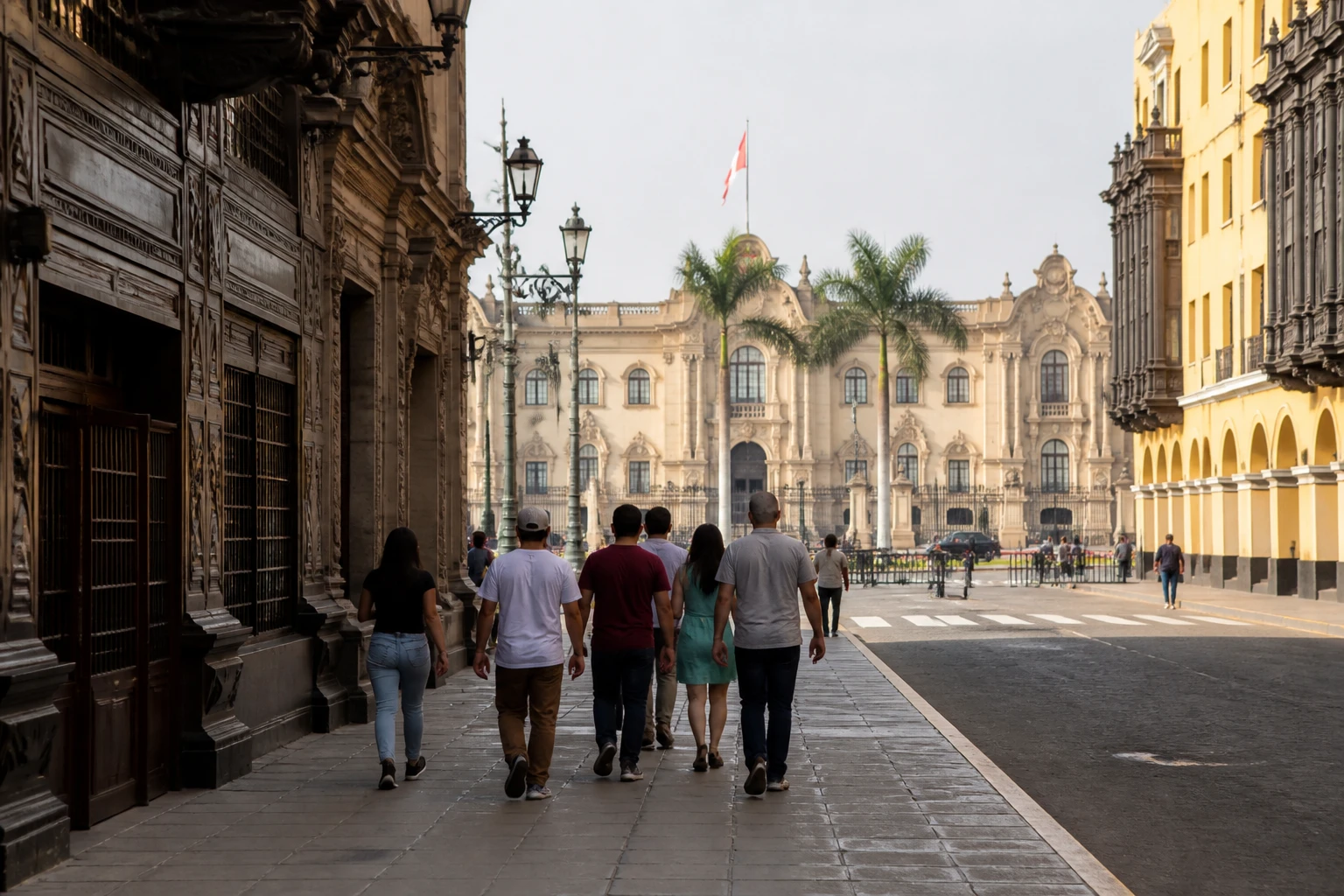
Once nearby, approach the plaza with awareness of controlled areas and follow official directions. Do not cross barriers or try to pass through a gathering to preserve a sightseeing plan. If access is restricted, step away and use another part of the Historic Centre only when the surrounding route is clearly open.
Visitors arranging a taxi or planning public transportation can consult Lima safety, taxis, and transport tips before setting out. Save your return plan before arriving, particularly if temporary street controls could alter the point where a vehicle can collect you.
Current safety and access cautions
Check conditions on the morning of your visit. Current travel advisories warn that protests, demonstrations, and strikes occur in Peru, with Lima’s Historic Centre a particular concern. Access can be restricted. Avoid demonstrations, do not stop to watch them, and be prepared to change your plans if crowds or security operations develop.
Municipal notices describe the Historic Centre as an intangible zone where marches, demonstrations, and gatherings that threaten security or public health are prohibited. Even so, attempted mobilizations can prompt preventive controls. Lima announced reinforced patrols, vehicle checks, video surveillance, drones, and police coordination in response to possible mobilizations in June 2026.
Temporary conservation measures can also affect the visitor experience. A recent Ministry of Culture authorization allowed a preventive enclosure intended to protect the Monument to Liberty while respecting the monumental setting of Plaza Mayor. This does not mean the entire square is closed, but barriers or altered sightlines can be present. Check same-day conditions if photography is a priority.
- Review local conditions before traveling into the Historic Centre.
- Avoid demonstrations and leave the area if a gathering begins.
- Follow barriers, police instructions, and controlled pedestrian routes.
- Keep your sightseeing sequence flexible in case an entrance is unavailable.
- Do not count on completely unobstructed views while temporary protective work is present.
Still comparing Plaza Mayor Lima?
Ask for tour ideas, hotel suggestions, or a simple trip plan that combines both.
Trip Helper
Accessibility and comfort planning
Plaza Mayor is an outdoor urban space, but travelers should not assume that every route or surrounding building provides the same level of access. Plaza-specific details for step-free circulation, tactile guidance, accessible toilets, seating, and interior access are not standardized across the neighboring institutions.
Contact the specific venue in advance if you need wheelchair access, reduced-mobility support, sensory accommodations, or an accessible restroom. Ask about the entrance you should use and whether security barriers affect the route. General accessibility expectations for public and private premises do not guarantee that every historic interior will meet an individual traveler’s needs.
For a comfortable exterior visit, keep belongings easy to manage and avoid carrying equipment that slows you at controlled entrances. Bring only what you can keep close while walking and taking photographs. A compact plan is especially useful if temporary barriers require a longer route around part of the square.
How Plaza Mayor fits into a Lima itinerary
Plaza Mayor deserves a place in a first visit to Lima when colonial-era civic history and architecture are priorities. Its clustered landmarks make it an efficient opening chapter to the Historic Centre. The square also helps visitors understand the relationship between the city’s government, municipal, and religious institutions before exploring farther.
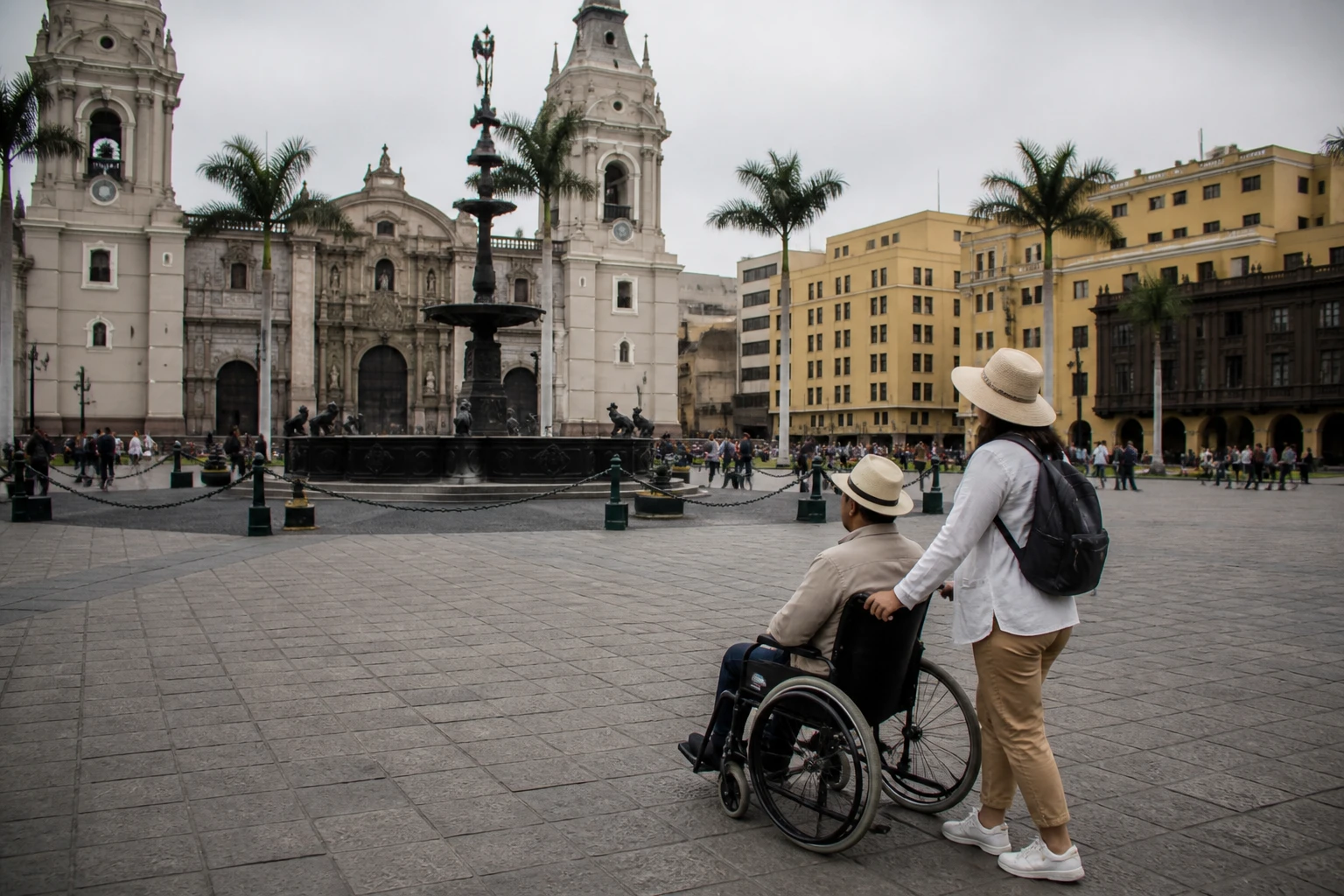
Do not treat it as a full-day attraction by itself. Its value grows when combined with a wider historic walk or a confirmed interior visit. Travelers seeking a broader mix of archaeological sites, coastal districts, museums, and historic streets can compare the plaza with other best things to do in Lima before assigning time.
A practical plan is to reserve a flexible daytime period for central Lima, begin at Plaza Mayor, and then continue according to access and interest. If a scheduled interior is operating, include it. If not, use the square as a visual introduction and carry on through the surrounding historic district.
Is Plaza Mayor worth visiting?
Yes, Plaza Mayor is worth visiting for travelers who want a compact introduction to Lima’s historic civic core. Few stops explain the city’s former political, religious, administrative, and economic importance so efficiently. The surrounding landmark façades make the square meaningful even when you do not enter a building.
Its weakness is unpredictability. Interior access is separate, and security or conservation measures can alter circulation. Visit during the day, check local conditions before departure, and arrive with a flexible route. That approach preserves what Plaza Mayor does best: giving Lima’s long civic history a clear physical setting.
Frequently asked questions
Is Plaza Mayor the same as Plaza de Armas in Lima?
Yes. Plaza Mayor is also called Plaza de Armas and is the central historic square of Lima’s Historic Centre.
Do you need a ticket to visit Plaza Mayor in Lima?
Treat the open square as an exterior public-space stop, but check each surrounding building separately for its current admission rules, fees, hours, and reservations.
What buildings surround Plaza Mayor?
The major surrounding landmarks include the Government Palace, Lima Cathedral, Archbishop’s Palace, and Municipal Palace.
What is the best time to visit Plaza Mayor?
Plan a daytime visit and keep the schedule flexible. Nearby interiors follow separate timetables, while public events or security measures can affect access.
Are guided visits available at Plaza Mayor?
A tourism inventory describes free guided visits of about 40 minutes at the Municipal Palace. This information applies to that building rather than the entire plaza, so confirm current availability before visiting.
Is Plaza Mayor accessible for wheelchair users?
Accessibility should be confirmed with each venue you intend to enter. Plaza-specific information about step-free routes, accessible toilets, tactile guidance, and seating is not standardized across the square and its surrounding buildings.
Is Plaza Mayor safe to visit during demonstrations?
Do not visit during a demonstration. Check local conditions, avoid gatherings, follow official instructions, and change your plans if access to the Historic Centre is restricted.
How long should you spend at Plaza Mayor?
Allow enough time for a complete circuit and closer views of the main façades, then add separate time for any confirmed interior visit. The Municipal Palace guided visit described in the tourism inventory lasts about 40 minutes.
Lima Half-Day City Walking Tour (Small Groups)
Discover the city of Lima known as the "City of Kings"! We will visit the highlights of the Historic Center of Lima such as the Plaza de Armas, the Ca...
Lima Shore Excursion: Pachacamac and City Tour from Callao Port
Let yourself be surprised with this beautiful trip to ancient Peru, with the best places full of history and culture...